
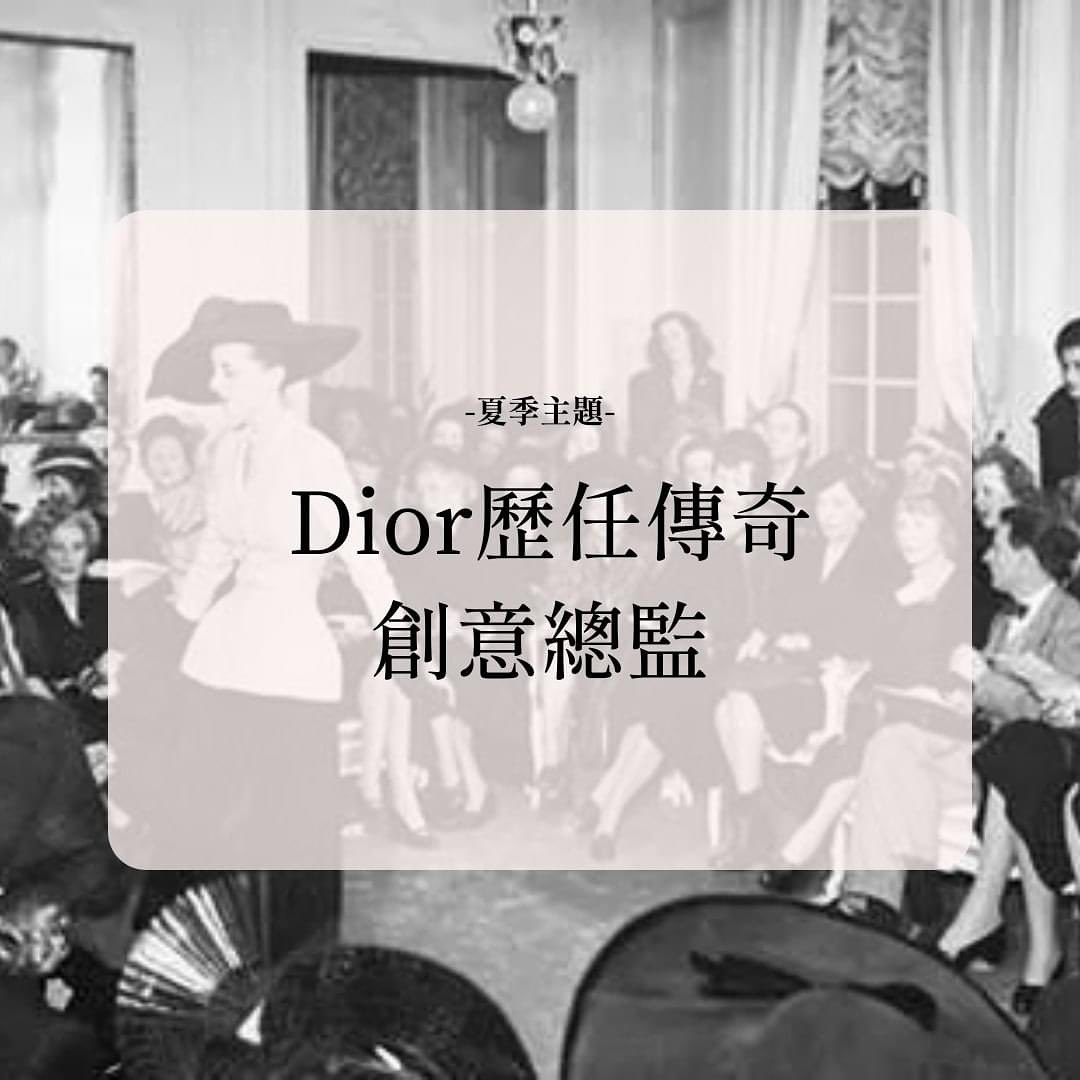
Dior's Legendary Creative Directors - An Everlasting New Look
1946-1957: Christian Dior
1957-1960: Yves Saint Laurent
1960-1989: Marc Bohan
1989-1996: Gianfranco Ferre
1996-2011: John Galliano
2012-2015: Raf Simons
2016- present: Maria Grazia Chiuri
From Christian Dior's creation of the "New Look" after World War II to Maria Grazia Chiuri's feminist fashion revolution, Dior, a symbol of fashion, classicism, and elegance, has become one of the world's most influential luxury brands, thanks in no small part to the dedication and creativity of its successive creative directors.
In the brand's more than seventy-year history, how exactly did these designers create this fashion legend? We will take you on a journey through the roots, reviewing their classic designs and the brand's spirit.
Christian Dior - Founder of the Brand

February 12, 1947, was a pivotal day in fashion history—Christian Dior presented his eponymous brand's first fashion collection at 30 Avenue Montaigne. The unprecedentedly long, flowing cuts, cinched waists, and full skirts revolutionized the simple and austere clothing style of postwar France.

At the time, France was economically depressed and resources were scarce. Clothing materials were used sparingly, and women wore simple, sharp silhouettes. The fashion world was on its last legs. These 90 unprecedentedly gorgeous and brightly colored designs broke the monotony of French fashion and the postwar gloom, allowing women to rediscover the "Belle Époque" of the late 19th century.


The "En Huit" (French for 8) collection sculpted the sensual posture of women, as shapely as the number 8. The Bar Jacket, with its cinched waist and form-fitting design, soft shoulder lines, and corset-like structure paired with a full, wide skirt resembling a floral crown, accentuates the hips, emphasizing curves. Its structured cut and high-quality materials made it a classic Dior design.

The Bar Jacket is named after Hotel Plaza Athénée, a bar frequented by Mr. Dior and a popular gathering place for Parisian aristocrats and the middle class. The bustling women in the bar inspired his creation, resulting in a women's suit perfectly suited for bar wear.
The Bar Jacket features four key tailoring characteristics: a whittled waist, exaggerated hips, gentle shoulders, and an enhanced bust, sculpting the ideal female figure.
Upon seeing such ingenious three-dimensional tailoring, even Harper's Bazaar editor-in-chief Carmel Snow exclaimed, "Dear Christian, your collection brings a New Look!" The New Look thus became the new name for the Bar Suit; it was not only a revolution in fashion but also an ideal of returning to the pre-war world.
 Dior 2011 SS by John Galliano
 Dior 2012 FW by Raf Simons
 Dior 2022 FW by Maria Grazia Chiuri
Successive designers continued this spirit, incorporating their own styles and constantly interpreting and forging the New Look that belonged to each era. Regardless of which successor's show it was, the New Look was a never-ending revolution.

To give women fuller curves, Mr. Dior used almost double the amount of cotton or taffeta, thus drawing criticism for being too extravagant and controversial. In reality, Mr. Dior disregarded the economic downturn and rationing, solely to allow women to regain the freedom and ease to pursue beauty.
Even so, celebrities including Marlene Dietrich, the Duchess of Windsor, and Princess Margaret all wore Dior clothing; the following year, Dior opened a branch on 5th Avenue in New York, and within two years of its opening, its revenue accounted for a staggering 75% of Paris's total exports, a true revolution in global fashion.
 Reports on Dior opening a branch on 5th Avenue
 Marlene Dietrich in Dior
 Duchess of Windsor in Dior
 Princess Margaret in Dior
Besides the New Look, Mr. Dior also created many classic silhouettes, such as the A-Line with its flared skirt hem, the H-Line with its slightly emphasized waistline, the Y-Line with its wide top and narrow bottom, and the Tulip-Line that made women's bodies sway like tulips—rounded cap sleeves paired with a slender waistline. These silhouettes became the cornerstone of subsequent fashion development.

 A-Line
 H-Line
 Y-Line
 Tulip-Line
Monsieur Dior, who transformed the post-war decadence with elegance and style, was not originally a design student: born into wealth, he studied politics to meet his family's expectations. However, his innate artistic talent led him to constantly interact with renowned artists during his studies, becoming friends with painters such as Picasso, Matisse, and Dalí, and even opening a gallery with them. The first exhibition of Dalí's most famous painting, "The Persistence of Memory," was handled by Monsieur Dior's gallery.
 Salvador Dalí, “The Persistence of Memory”
Unfortunately, during the Great Depression of the late 1930s, Monsieur Dior's father's company went bankrupt, and he began working as an illustrator to make a living. Later, due to his outstanding artistic talent, he was hired as a designer for Lucien Lelong, where he learned a great deal about haute couture.
 Dior's designs during his time with Lucien Lelong
Subsequently, at the invitation of fabric tycoon Marcel Boussac, Mr. Dior partnered with him to found Christian Dior, and in 1946 moved into 30 Avenue Montaigne—the birthplace of this fashion legend.
—----------------------------------------------------------------------------------------------------
Yves Saint Laurent - The handpicked young genius
In 1957, as the brand entered its first decade, Mr. Dior suffered a heart attack and passed away suddenly en route to Italy. Following his will, the brand appointed his 21-year-old assistant, Yves Saint Laurent, to succeed him, making him the youngest fashion designer in the world at the time.
At the time, he was not well-regarded because of his young age, but his debut collection at Dior, "Trapeze," was well-received, saving the brand from a depressed market affected by the financial crisis and changing public opinion. "Trapeze" features narrow shoulders and a knee-length trapezoidal skirt, which is looser and softer than the waist-cinching design of Mr. Dior's era, making it more comfortable for the wearer.
But his good fortune didn't last. His designs, such as the "Arc Line" series, the "Beat" series, and the hobble skirt, were considered too avant-garde, and his aesthetic, perceived as belonging to the "Beat Generation," dissatisfied his long-time customer base. Taking advantage of his military service, the brand promoted designer Marc Bohan to replace him.


Yves Saint Laurent's first collection sketches and finished products
—----------------------------------------------------------------------------------------------------
Marc Bohan - A favorite of the brand for thirty years

Marc Bohan modified Dior's iconic silhouette, creating the "Slim Look," making the lines and designs of the clothing simple and elegant—at the time, Parisian newspapers even compared it to the New Look.
 Marc Bohan, Dior's "Black and White" ensemble, Slim Look Line, 1961
However, after the initial success, Marc Bohan faced the challenges of the times—the "Youthquake" of the 1960s, in which younger generations rejected traditional authority, challenged mainstream values, and consumers were no longer willing to follow the tastes of haute couture brands, with clothing styles becoming increasingly daring.
In this rebellious era, Marc Bohan's steady and conservative style appeared somewhat conservative. Although it attracted celebrities such as First Lady Jacqueline Kennedy and Princess Grace Kelly of Monaco, it failed to keep up with the trends. Its development during his tenure was noticeably less successful than in its heyday, and the brand even fell into a period of severe losses in the 1980s.
 Jacqueline Kennedy in Dior
 Grace Kelly in Dior
—----------------------------------------------------------------------------------------------------
Gianfranco Ferre - The Architect of Fashion

Following the bankruptcy of its parent company, Boussac Group, and after several changes of ownership, Bernard Arnault, known as the "Father of Luxury" and the creator of the LVMH Group, officially acquired Dior in 1984.
Subsequently, in 1989, Gianfranco Ferre, an Italian with an architectural background, took over as artistic director, becoming the brand's first non-French artistic director. Therefore, his clothing designs are rich in architectural lines and structural features, a style evident in his sketches. He used simple lines to create diverse silhouettes, bringing an "architectural aesthetic" to Dior, exuding a classic feel within modernity.

Throughout Ferre's design career, the white shirt has been an indispensable element. He designed over ten thousand white shirts—just a piece of white cloth, yet in his hands, it contained endless whimsy; in the constant pursuit of new cultures and forms of interpretation, the white shirt was repeatedly deconstructed and redefined, becoming his signature, a symbol of elegance.


Living in the hippie era of the 1970s, Ferre greatly admired Eastern culture and even traveled to India to study garment-making techniques. The embroidery, dyeing, beading, and other crafts he learned there, as well as the use of highly saturated colors, were all incorporated into his later designs, becoming part of the Dior brand's DNA.


His bold and unrestrained designs successfully revitalized the brand image, and his Lady Dior design became one of the brand's iconic bag styles. His collaboration with the brand was extended to 1997 due to its excellent performance, arguably bringing Dior back to the forefront of the industry through his outstanding designs.
—----------------------------------------------------------------------------------------------------
John Galliano - The Incurable Master of Romanticism
After Ferre's quiet departure, Dior welcomed British designer John Galliano—the most unconventional creative director in Dior's history. His talent is undeniable: a graduate of Central Saint Martins College of Art and Design, he made a name for himself in the fashion world with his graduation portfolio, later founding his own brand and working at Givenchy.
In 1997, his first Dior haute couture show was a sensation—inspired by his trip to Shanghai, the show broke away from Dior's usual French elegance, becoming more glamorous, dazzling, free-spirited, and dreamlike. The media unanimously praised it, and a flood of orders poured into Dior—due to the overwhelming number of appointments, department manager Caroline Grouvel even had to use her office as a fitting room.


He always intertwined and combined styles and tailoring from different eras and regions, integrating the cultures and arts of Egypt, Africa, Japan, and China with his own wandering fantasies through the exquisite craftsmanship of the Dior ateliers, transforming them into his own creations and constantly expanding the brand's connotation; each of his fashion shows was a journey to the extraordinary: haute couture became more glamorous and imaginative in his hands, and each season's show was a complete sensory experience combining set design, music, performance, and clothing.


Some of his iconic designs, such as the saddle bag, embossed denim, and newspaper-printed skirts, have been repeatedly reused or reissued by subsequent creative directors, and he further shaped the aesthetic of a generation with his bias cut.


But each year, Dior's women's collections include multiple lines such as haute couture, ready-to-wear, early spring resort, and early autumn. Adding Galliano's personal brand, at his peak, he was responsible for nearly 20 collections and 600 looks a year—the pressure was immense.
The immense pressure, coupled with his self-indulgence leading to alcoholism, drug use, and mental breakdown, caused him to completely lose control in 2011. A racial discrimination scandal erupted, resulting in his dismissal from Dior. The once-golden boy of fashion lost his stage overnight.
—-------------------------------------------
Raf Simons - The Return of Old-Style Elegance

After Galliano left Dior due to his controversial remarks, Raf Simons officially became the brand's creative director, attempting to return to the old-school elegance of his earlier work while incorporating minimalist lines to create understated yet stylish new pieces. In his first haute couture collection in 2012, he successfully overturned the unspoken rule that haute couture was extravagant, glamorous, and impractical, returning to the original spirit of Christian Dior.

He created wearable unisex trousers based on the classic "Bar Jacket," incorporating many of the founder's A-line and H-line tailoring techniques. In terms of color, he boldly used fluorescent hues, finding a balance between brand tradition and personal style. He also released the documentary "Dior and I," recounting the creation and presentation of his first haute couture collection. He rewrote the definition of haute couture with his talent.

Unfortunately, in 2015, Raf went against the fashion world's expectations and decided not to renew his contract, focusing instead on his own brand.
—----------------------------------------------------------------------------------------------------
Maria Grazia Chiuri - First Female Creative Director

Today, Maria Grazia Chiuri, who took office in 2016, is Dior's creative director and the brand's first female director. Having created best-selling products such as the Fendi baguette bag and Valentino studded shoes, she has also launched numerous popular designs for Dior, including the "We should all be feminists" T-shirt, J'Adior ribbon shoes, the embroidered Book Tote bag, and the Montaigne bag (30 Monrtaigne), resulting in significant brand growth.


Chiuri has dramatically changed the brand's aesthetic, bringing a more open feminist style and a youthful aesthetic to the brand's creations. She also heavily utilized social media and exhibitions to increase exposure, relaxing waistlines and reducing the use of high heels in her designs to make them more approachable and wearable.
—----------------------------------------------------------------------------------------------------
FAQ
- Q: How did Christian Dior begin his fashion design career?
A: Mr. Dior began illustrating for fashion magazines such as Le Figaro and Le Jardin des Modes in 1935 and started selling his designs to high-fashion brands including Jean Patou, Nina Ricci, Maggy Rouff, and Balenciaga. In 1938, he was hired as a designer by Robert Piguet, marking the beginning of his fashion design career.
- Q: Why did Mr. Dior choose 30 Avenue Montaigne to open his first store?
A: Because his requirements at the time were "small in size, elegant and understated in style, without a prominent historical background," and it was adjacent to a hotel. After eliminating many hotels and main streets, he chose to open his first store next to the Hotel Plaza Athénée.
- Q: Who was Mr. Dior's muse?
A: Mitzah Bricard. Her background remains shrouded in mystery. She later became the head of Dior's hat-making workshop; the pearl necklaces around her neck, the scarf knots on her wrists, and the leopard print elements in her designs are all her trademarks. Thanks to her, leopard print became an important symbol of Dior's brand aesthetics, making Mr. Dior the first designer to apply leopard print to haute couture.
- Q: Yves Saint Laurent's "Beat Generation" aesthetic dissatisfied some of his old customers. What exactly did he mean by that?
A: The Beat Generation, also known as the Tired/Beat Generation, represented the first truly postmodern "subculture," characterized by a decadent and decadent aesthetic in fashion. Yves Saint Laurent's "Beat" collection, launched in 1960, was predominantly black and marked the first use of leather jackets in haute couture; this overly avant-garde style was not accepted by clients and the media at the time.
- Q: What inspired Marc Bohan's Slim Look?
A: Inspired by low-waisted skirts of the 1920s and the dressing style of Jacqueline Kennedy.
- Q: Who founded Dior's ready-to-wear women's line?
A: Mr. Dior founded the New York ready-to-wear store in 1948, but the first French ready-to-wear collection, "Miss Dior," was launched in 1967 by Philippe Guibourgé, Marc Bohan's assistant.