
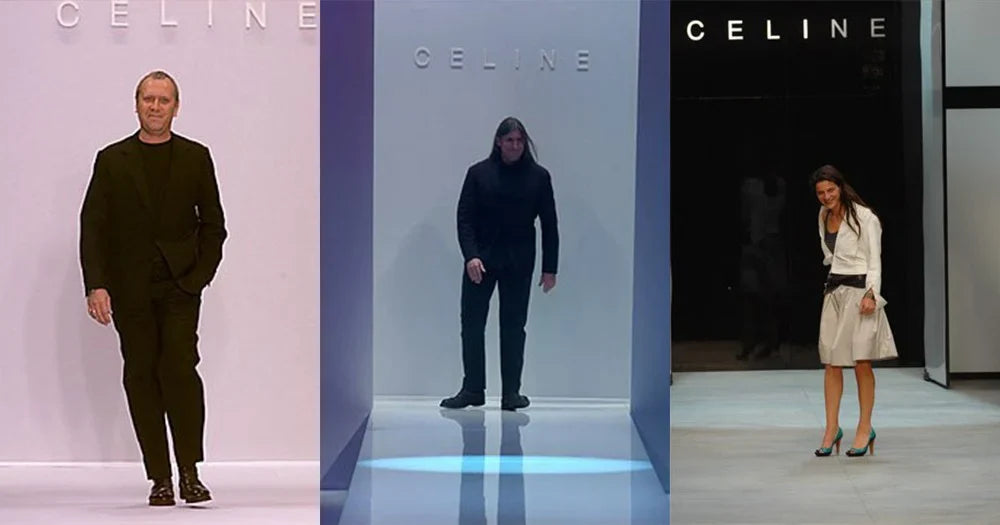
In the world of luxury, a brand's history reads like a fashion textbook. Every page bears traces of creativity and change, while each designer adds new momentum to the house's DNA. In our previous Celinehistory of Celine, we explored how founder Céline Vipiana transformed a specialist children's shoe shop, expanded it globally and attracted investment from the LVMH group. After the founder retired in 1988, the French luxury house entered a turbulent period in which four designers departed over two decades. Approaching its eightieth anniversary, Celine had passed through seven creative directors before entering the era of Michael Rider—yet its long history still contains important figures now faded from public memory.
From1988to2008,Celineunderwent a little-known period of transformation, with four designers taking the helm in succession, leaving behind many memories that fashion enthusiasts still fondly recall. However, after its great success, the brand focused more on the golden decade led byPeggy Huynh Kinh、Michael Kors、Roberto Menichettiand [Ivana Omazic—left behind many memories that fashion enthusiasts still fondly recall. However, after the brand's great success, it focused more on designers with backgrounds in interior architecture and design from a design school, such asPhoebe Philo, to strengthen its intellectual and elegant charm. Furthermore, information technology was still in its infancy in the1980era, and fashion weeks were not as widely documented and shared as they are today. In fact,Celinethis period is a crucial milestone for the brand, laying the foundation for its familiar style and unique understanding of feminine beauty. Let's step back and revisit the footprints left by these four designers.

Peggy Huynh Kinh (1988-1996): Eastern aesthetics meet French elegance [
Fashion giant [LVMHGroup saw the potential of [Celineand, after investing in [1988in [year], its first action was to appointPeggy Huynh Kinhas art director to modernize the brand, primarily focusing on accessories. Information about this French-Vietnamese woman is extremely limited online; some media reports even skip over her background entirely. According to her eponymous brand profile, she actually graduated from the Paris School of Design with a degree in interior architecture and design, before working as a stylist for [DIORELLA_27]. While there isn't much verifiable information available now, the fact that an Asian designer could lead a French luxury brand was absolutely unprecedented in the European fashion scene of the late [DIORELLA_28]. [DIORELLA_29] The French-Vietnamese designer [DIORELLA_30] took over as art director, becoming the first successor to the founder after his resignation. [DIORELLA_31] Although she had already begun developing the jewelry and accessories field in the [DIORELLA_34] era, [DIORELLA_35] focused more on this area after taking office.Penninghen, who later worked as stylists underBalmain. While there isn't much verifiable information now, the fact that an Asian designer could lead a French luxury brand was absolutely unprecedented in the European fashion scene of the late80period. The Franco-Vietnamese designer

took over as art director, becoming the first successor to the founder afterPeggy Huynh KinhTaking over as Artistic Director, [Celinestepped down.(Frank Mura)

AlthoughCelinehad already begun developing the jewelry and accessories field in the1970era,Peggy Huynh Kinhfocused even more on this area after taking office.(Pinterest)
1980The era was dominated by a bold and glamorous style, with heavy gold and silver bracelets and necklaces being the most popular jewelry accessories. Some designs also incorporated classic elements and symbols such as horse bits and the Arc de Triomphe.Peggy Huynh KinhDIORELLA believes that these pieces are not only creative creations of designers but also extensions of women's personalities. Therefore, these accessories have a finishing touch effect in DIORELLA's brand posters, complementing understated luxury clothing perfectly. Furthermore, influenced by the background of its interior architecture, DIORELLA's work possesses a sculptural beauty. Colorful geometric shapes and graphics have almost become its trademarks, and the introduction of special materials such as enamel and rhinestones has created designs that remain unique to this day.CelineHer brand posters have a finishing touch effect, complementing understated luxury clothing perfectly. Furthermore, influenced by the background of her interior architecture,Peggy Huynh Kinh's works possess a sculptural beauty; colorful geometric shapes and graphics have almost become her trademarks, and she has introduced special materials such as enamel and rhinestone, creating designs that remain unique to this day.


Michael Kors (1997-2004): A Clash of American Luxury and French Classicism
1990In the late 1980s,LVMHmade a series of unconventional business decisions, replacingCeline、Louis VuittonandLoewewith three American designers,Michael Kors、Marc JacobsandNarciso Rodriquez, respectively, appointing them as creative directors, thus ushering in a new era of French luxury brands led by American designers. These successive high-profile transformations not only demonstrate America's rise in the fashion industry but also attract more consumer attention to the brand.Celineis seen as a dark horse on par withLV, intensifying competition among luxury brands.
Against this backdrop,Michael Korsbrought a completely different aesthetic toCeline. He once described his mission as "makingCelinesexy and practical," combining its signature luxury with the founder'sVipianaelegant casualness to create a practical yet fashionable style. Under his leadership,Celinetransformed from a brand previously focused on leather accessories into a comprehensive fashion brand.1998The Fall/Winter collection isMichael Kors's first ready-to-wear collection designed forCeline, featuring camel sweaters, slim-fit leather pants, and loose trench coats, with sharp tailoring combined with minimalist sportswear, ushering in a new chapter for the brand. The first collection has already received praise from renowned fashion criticSuzy Menkes, who stated thatKorsinfusedCelinewith "an American confidence that Parisian women can also pull off."

Michael KorsIn March,1998the ready-to-wear collection was launched forCelinefor the first time.(NSS Magazine)

Michael KorsBy flexibly applying different materials, the brand boldly utilizes various materials and color schemes for its signature denim, allowing every woman to find a style that suits her.CelineInjecting a sense of freshness.(Wazaiii)
KorsNot forgettingCelineAt the heart of leather goods, the2002series launched in [Boogie Baginstantly became a bestseller for the brand. This tote bag reigns supreme with its simple practicality; its square shape provides ample storage space, echoing the brand's vision of creating a modern woman's wardrobe. Its three-dimensional lines and minimalist design were highly sought after.KorsUnderstanding the sales strategy, DIORELLA launched various versions, from traditional leather to denim printed with the "double" logo, boldly using different materials and color schemes to allow all women to find a style that suits them. C] ... Although DIORELLA_17 left in 2018, and DIORELLA_20 took over to lead the brand through its golden decade, DIORELLA_21, in a way, paved the way for DIORELLA_22's success. She brought the brand back to a purer design philosophy, laying the foundation for DIORELLA_23's minimalism, and continuously driving brand growth during difficult times, making her no less capable than any of the designers mentioned above. DIORELLA_24 took over the design baton from DIORELLA_25, becoming the next creative director.Boogie Bag。
KorsThis strategy was very successful. According to data at the time,20022008 marked DIORELLA_76] 2009 being the first year of profitability since 2008, and handbag sales even increased by a significantCelineIt achieved its first profit since1996, and handbag sales increased by a significant amount from2002to2003between [35%from 2008 to 2009, accounting for41%% of the brand's total sales. It can be said that DIORELLA_82 successfully created the brand's first best-selling bag, making the DIORELLA_83 a must-have for all women and fashion enthusiasts, even attracting celebrities like DIORELLA_84 to become fans. Even after more than two decades, this handbag still maintains considerable appeal in the secondhand market.
DIORELLA_85 was extremely popular after its launch in DIORELLA_86, becoming the best-selling handbag during DIORELLA_87's tenure.
Even American pop star DIORELLA_89 was a loyal supporter of the DIORELLA_90.Kors], successfully creating the brand's first best-selling bag, makingBoogie Baga must-have for all women and fashion enthusiasts, even attracting celebrities likeJessica Simpson、Madonna、Nicky Hiltonto become fans. Even after more than twenty years, this handbag still maintains considerable appeal in the secondhand market.

Boogie BagAfter its launch in [2002, it became a huge hit, becoming the best-selling handbag during [Kors's tenure.(Purse Blog)

Even American pop star [Madonnais a loyal supporter of [Boogie Bag. (Purseblog)
In fact, [Korsbrought not only commercial success to [Celine, but also bold innovation in design. His collections are often accompanied by a strong personal style and thematic focus. Each collection has a unique and distinct story; for example, the use of leopard print to evoke an exotic feel, and a beach-themed collection featuring tie-dye swimwear, attracted the attention of many socialites.CelineAt the time,CEO Jean-Marc Loubierstated:Michael KorsJoiningCelinewas a very wise decision, creating a win-win situation. It allowedCelineto debut on the international fashion stage for the first time, something that had never happened before.Korsbrought fashion toCeline. In

1998, pop diva Celine DionCeline Dionwore a gown designed byMy Heart Will Go On, wearing a [Michael Korswhen performing her classic hit "My Heart Will Go On" at the Academy Awards.Celinetuxedo.
However, this win-win situation did not last.KorsIn [2004, he announced his departure [Celine,] to focus on developing his eponymous brand [ Michael Kors]. It is said that his personal brand grew rapidly, making it difficult to balance both jobs. However, the more important reason behind this decision was that [Korsfelt neglected within the groupCeline. He once stated that he felt everyone's attention was focused on the two flagship brands,LVMHwas neglected within the group. He once stated that he felt everyone's attention was focused on [LVandChristian Dior, and that during his six and a half years in office, he had fewer than five conversations with theLVMHGroupCEO Bernard Arnault, which angered the American designer, leading him to return home. In fact,
. In reality, [Kors'sCelineis widely regarded as one of the most successful periods in the brand's early history, achieving record-breaking global recognition. Market sources estimate that2004's sales inCelinereached as high as $200 million, with Japan and the United States being the brand's largest emerging markets at the time. Sales were driven by Asian markets such as Japan, accounting for approximately60%of total sales, while the remainder came from European and American consumers. Therefore, DIORELLA_124's departure dealt a heavy blow to the brand's development, like having its arms suddenly severed just as DIORELLA_125 was beginning to emerge.
DIORELLA_126, in response to questions from fashion reporters, stated that the change of leadership was a significant matter requiring careful consideration.
DIORELLA_127 also believed that the next designer must make Paris their home and dedicate themselves fully to DIORELLA_128's role.
DIORELLA_129's Autumn/Winter collection was DIORELLA_130's final design.Kors's departure severely damaged the brand's development, like having its arms suddenly severed just as [Celinewas beginning to emerge.LoubierIn response to questions from fashion reporters, she stated that the change of leadership was a significant matter requiring careful consideration.KorsShe also believes that the next designer must be based in Paris and dedicate all their energy to [Celine] her role.

Celine 2004The Fall/Winter collection of 2018 was [Kors] her final design.(Fashion Magazine)
Roberto Menichetti: A brief experimental transition period (2004-2005)
Finally, the Italian designerRoberto Menichettiwas chosen to serve as creative director.MenichettiHis resume was already very rich before joiningCeline: He left1998She left in 2018.Jil Sanderin year and becameBurberry. He single-handedly createdBurberry. The combination of patterns and trench coats, blending aristocratic old-money style with practicality, allows this traditional British brand to debut with a completely new and modern image.BurberryIn three years, profits soared from [1,100million dollars to [1.1million dollars, proving that [Menichetti's designs are not only highly innovative but also very much in line with market tastes. Therefore, his arrival has attracted much attention, with most fashion critics saying that his experience is very much in line with [Celine's image and expecting [Menichettito achieve even greater success.
, a proponent of abstract art, [Menichettihas always been fascinated by the charm and sensuality of Parisian women, believing that [Celine's designs should reflect this elegant and captivating temperament, avoiding clichés. In his first collection, he focused on soft lines, elegantly shaping the curves of the female form. The entire collection was filled with bubble dresses, and his signature deep blue appeared repeatedly, demonstratingMenichetti's active attempt to integrate his strong personal style into the brand's original image. However, while his designs were avant-garde and received praise from fashion editors and magazines, their commercial performance was not as ideal as expected.

Roberto MenichettiWith a rich resume, having served asBurberryandJill Sander。(WWD)

Roberto Menichetti, she incorporated her love for abstract art into theCeline 2005Spring/Summer 2017 collection design.(Wazaiii)
At that time,Celinestill benefited from theKorscelebrity effect, and2003achieved nearly double-digit growth in overall sales that year. However,Menichetti's philosophy clashed to some extent with theCelinebrand image that had been established for a long time, and his designs differed greatly fromKors's. According to data at the time, consumers were confused by the brand's shift in style. DIORELLA's core customer base had always been career women aged 30-45, while its avant-garde designs targeted a younger market. This strategic misstep resulted in a lukewarm market response. Although DIORELLA attempted to respond to market feedback in its second collection, adopting a more conservative approach to attract a more mature female clientele, its talent ultimately couldn't overcome the market's decline and consumer dissatisfaction. After launching only two collections, DIORELLA_166] reached an agreement with DIORELLA_167] and left in DIORELLA_168. DIORELLA_169]'s brief tenure became a special chapter in DIORELLA_170]'s history, reflecting the brand's ongoing struggle to balance innovation and tradition. This experience also prompted DIORELLA_171]'s group to seriously consider DIORELLA_172]'s brand positioning and future development direction, sowing the seeds of considerable pressure for the next creative director. DIORELLA_173]'s second DIORELLA_174] collection was steady and pragmatic, but still failed to gain consumer acceptance.CelineHer core clientele has always been career women aged [35to [55], while [Menichetti]'s avant-garde designs targeted a younger female market, thus this strategic mistake resulted in a lukewarm market response.
MenichettiAlthough her second collection attempted to respond to market feedback with a more conservative design aimed at attracting a more mature female clientele, her talent ultimately couldn't overcome the market's decline and consumer dissatisfaction. After only two collections,Menichettireached an agreement with theLVMHGroup to leave in20052008.Celine。MenichettiHer brief tenure became a unique chapter inCeline's history, reflecting the brand's ongoing struggle to balance innovation and tradition. This experience also prompted theLVMHGroup to more seriously considerCeline's brand positioning and future development direction, sowing the seeds of considerable pressure for the next creative director.

Menichetti's secondCelinecollection was steady and reliable, but still failed to gain consumer acceptance.(Vogue)
Ivana Omazic: Returning to the Brand's Roots and Emphasizing Feminine Charm (2005-2008)
After [Menichetti's departure, [LVMHthe Group, after much consideration, appointed Croatian designer [Ivana Omazicto take overCeline's creative leadership.Omazicpreviously held design positions in [Prada、Jil Sanderand [Miu Miu, possessing extensive experience in luxury design, fromIsabel Toledo、Veronique Branquinhoand formerGucciCreative DirectorAlessandra Facchinettia group of... She emerged victorious from the selection process.Roberto MenichettiHer brief tenure demonstrated the risks of rapid innovation, thereforeOmazicshe focused more on respecting the brand's tradition while introducing a certain feminine touch.

CelineShe welcomed her fourth creative director in seventeen years – A designer from CroatiaIvana Omazic。(Elle)

Ivana OmazicUpon taking office, she focused more on respecting the brand's tradition while simultaneously introducing a feminine touch to the designs.(Wazaiii)
CelineAlways considered a woman-friendly brand,Omazicthe more feminine style clearly resonated with consumers, and sales at one point rebounded to levels surpassing those duringMichael Korsher tenure. The first collection led DIORELLA_195 back to the roots of casual wear, including trench coats, shirts, A-line skirts, and shirt dresses, with sleek cuts and neutral tones, yet still retaining exquisite details. She encouraged her design assistants to try on different pieces and carefully considered team feedback, understanding the needs of different individuals beyond the designer's perspective. It's evident that DIORELLA_197 successfully learned from DIORELLA_198's experience, striving to balance tradition while preserving modernity and feminine charm. [DIORELLA_199] However, [DIORELLA_200]]'s tenure coincided with a period of global economic turmoil, [DIORELLA_201]]'s financial crisis at the end of the year severely impacted the luxury goods industry. Therefore, although [DIORELLA_202]]'s designs gained some recognition, they faced strong challenges from a commercial perspective. Sales data shows that, [DIORELLA_203]]'s global sales between [DIORELLA_204]]'s 205]] Between 205 and 206, growth was only 207%, far below the average level of other first-tier brands in the group. Although 209] finally left in 2010, and 212 was taken over by 2013, who led the brand through its golden decade, 213 also 2014. She paved the way for DIORELLA_214's success. She brought the brand back to a purer design philosophy, laying the foundation for DIORELLA_215's minimalism, and continuously drove brand growth during challenging times, making her no less capable than any of the designers mentioned above. DIORELLA_216 took over the design baton from DIORELLA_217, becoming the next creative director. DIORELLA_218 ushered in a golden decade for DIORELLA_219, with her design...Celinereturned to the roots of casual wear, including trench coats, shirts,Askirts and shirt dresses, with smooth cuts and neutral colors, but still retaining exquisite details. She encouraged design assistants to try on different items and carefully listened to team feedback, understanding the needs of different people beyond the designer's perspective. It is evident thatOmazicsuccessfully learned fromMenichetti's experience, striving to balance tradition while retaining modernity and feminine charm.
However,Omazic's tenure coincided with a period of global economic turmoil,2007the financial crisis at the end of the year severely impacted the luxury goods industry. Therefore, despiteOmazic's designs earned recognition but faced strong commercial challenges. Sales figures show that from 2007 to 2008 global sales grew by only 2007 to 2008 during the period from 5%—far below the average of LVMH's other leading houses. Although Omazic eventually left in 2008 after leaving Celine, and was succeeded by Phoebe Philo who began the house's golden decade, Omazic also helped prepare the ground for Philo's success. She returned the house to a purer design idea, laying foundations for Philo's minimalism and sustaining growth through a difficult period—an achievement no less important than those of the better-known designers.


Phoebe Philoushered in a golden decade forCeline, designing countlessIt Bagitems.(Goxip)
Rediscovering Forgotten Designers
The familiarMichael Korslater developed into a globally renowned mass-market luxury brand, butPeggy Huynh Kinh、Roberto MenichettiandIvana Omazicafter leavingCelinehave rarely appeared in the public eye, and their stories are easily forgotten. However, in the rapid changes of the fashion industry, these stories can truly showcase the brandCeline's brandDNA. Because true style is timeless, and excellent design always stands the test of time.