
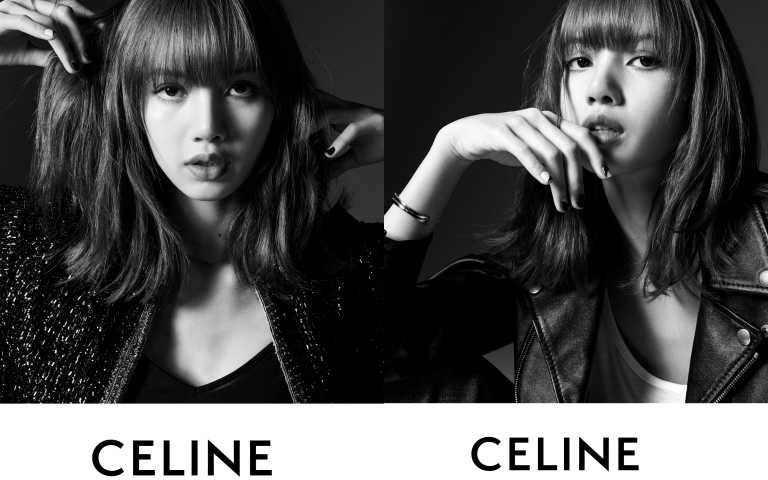
Since inviting "Human Barbie" Lisa from Black Pink to be its global brand ambassador, Celine's performance has soared in recent years, making it a favorite brand for many women. Even with the gradual slowdown in the international luxury market, Celine still recorded approximately €2.5 billion in revenue in 2023, with its brand value increasing by 51% year-on-year, once again being selected as one of the fastest-growing brands by the British brand consultancy *Brand Finance*. Whether it's fashion, handbags, accessories, or perfumes, they have all become popular styles in the fashion world. As a loyal fan, how much do you know about the story behind the brand? Let me take you into its history and unveil the mystery of this top French luxury brand!

Celine officially announced in 2020 that it had invited Lisa from Black Pink to be its global brand ambassador. (Celine)

"Human Barbie" Lisa even made her runway debut as a model for Celine's Fall/Winter 2022 collection. (Celine)
Celine ) The Founding of Celine (
) Although Celine is widely known for its high-fashion and leather goods, with its signature Luggage Tote, Classic Box, and Ava Triomphe handbags, this historically significant brand actually started with children's wear. Post-World War II Paris was a fiercely competitive fashion scene, but one couple, with limited resources, carved out a niche for themselves through mutual support. Founded in 1945, Celine initially focused on designing high-quality custom children's shoes. This seemingly ordinary start, unrelated to the brand's current sophisticated and fashionable image, became one of the keys to its later success. (

) Celine has launched countless IT bags, including the Luggage Tote, Classic Box, and Ava Triomphe. The Triomphe and other handbags are all celebrity favorites. (Fashion Jackson)
Céline Vipiana and her husband Richard opened the brand's first boutique in the 11th arrondissement of Paris, an area rich in handicrafts and antique shops. This district, the most densely populated area in the city, is famous for historical sites such as the Place de la Bastille and Place de la République, and Celine quickly gained popularity in this vibrant neighborhood thanks to its exceptionally high quality. Capitalizing on the post-war baby boom, their bespoke shoes, crafted by artisans, were highly praised by high society, establishing a loyal and stable customer base that allowed the brand to thrive in the future.


Celine's initial brand logo was a red elephant, designed by renowned artist Raymond...) The imagery, drawn by Raymond Peynet, was full of childlike charm and reflected the brand's early product line and image. At the time, they would even give away little red elephants as gifts to customers. The red elephant was not only eye-catching but also conveyed a cute and friendly atmosphere, winning the hearts of children. Although this red elephant logo was only used for a little over twenty years, it was an absolute success in marketing, even demonstrating the brand's evolution from children's wear to adult fashion.

Celine's earliest brand logo was a red elephant, drawn by artist Raymond Peynet. (Getty Images)

The elephant logo later appeared in a series of jewelry pieces from the brand. (Jewellery Kaleidoscope)
Celine The founder
When you think of Celine, you might immediately think of legendary designers like Phoebe Philo and Hedi Slimane, but in fact, founder Céline Vipiana was the longest-serving designer. Céline Vipiana served as creative director of Celine from its founding in 1945 until her retirement in 1988, a full forty years. Although online records of Celine's early history are scarce, the fact that the brand opened three stores in the fashion capital within just three years demonstrates its rapid growth, proving that even focusing on a single product and seizing market opportunities can lead to becoming an industry pioneer.

British designer Phoebe Philo served as creative director of the brand from 2008 to 2017, reinterpreting feminine elegance and sophistication with minimalism. (Goop)

Hedi Slimane, known as the rebellious son of the fashion world... Slimane served as the brand's creative director from 2018 to 2024, doubling the brand's revenue. Currently, Celine has 178 stores worldwide, offering jewelry, fragrances, beauty products, and home goods. Its brand reputation, business types, and even the number of stores have seen explosive growth. How did the brand transform from a children's shoe store into an international brand? The brand's ability to become a household name within a decade of its founding is due not only to the founders' bold business decisions but, more importantly, to the influence and clients in the fashion industry, which made the couple realize the brand's potential and gradually expand its focus to adult fashion. Celine launched its first beauty products in 2024, including lipsticks, foundations, and eyeliners. The turning point... From the 1960s onwards... Celine's product line gradually expanded. First, it entered the women's footwear market in 1963, followed by fragrances, leather accessories, and ready-to-wear collections. Besides its unwavering commitment to high-quality materials, its designs emphasized clean lines, precise tailoring, and timeless beauty. Each garment emphasized both practicality and aesthetics, such as sportswear, fitted shirts, and simple skirts. As the founder told *Interview* magazine, women could easily pack just one or two of her designs when traveling.New York Times)
Currently, Celine has 178 stores worldwide, offering products including jewelry, fragrances, beauty, and home goods. Its brand reputation, business types, and even the number of stores have all experienced explosive growth. How did the brand transform from a children's shoe specialty store into the international brand it is today? The brand's ability to become a household name within a decade of its founding is due not only to the founders' bold business decisions but, more importantly, to the influence and clients in the fashion industry. These connections made the couple realize the brand's potential, gradually expanding its focus to adult fashion.

Celine launched its first beauty products in 2024, including lipsticks, foundations, and eyeliners. The Turning Point (DIORELLA_2) DIORELLA_3) Starting in the 1960s, Celine's product lines began to expand gradually. First, in 1963, it entered the women's footwear market, followed by fragrances, leather accessories, and ready-to-wear collections. In addition to its consistent commitment to high-quality materials, the designs emphasized clean lines, precise tailoring, and timeless beauty. Each garment emphasized both practicality and aesthetics, such as sportswear, fitted shirts, and simple skirts. As the founder told *Interview* magazine, women could easily pack just one or two of her designs when traveling. DIORELLA_4) By the 1970s, Celine boutiques were found all over the world, including stores in Beverly Hills, USA, and Hong Kong. To expand sales and increase brand awareness, the brand launched the secondary line "Celine Diffusion" during the same period, similar to Marc by Marc Jacobs and CK by Calvin. Like Klein, it aimed to attract a younger clientele with more avant-garde designs and more affordable prices, while maintaining the brand's quality and character, making Céline Vipiana designs accessible to a wider range of customers. However, this sub-line quickly disappeared, so Celine Diffusion is now a collector's item on the vintage market.Celine)
Celine A turning point
From the 1960s, Celine steadily expanded its product range. It entered women's footwear in 1963, followed by fragrance, leather accessories and womenswear. Alongside a commitment to high-quality materials, the designs favoured clean lines, precise cutting and enduring beauty. Sportswear, fitted shirts and simple dresses balanced practicality with elegance. As the founder told Interview magazine, a woman could travel lightly with only one or two of her designs in her suitcase.

Celine's sportswear collection launched in 1969. (HPrints)

Celine still offers sportswear and accessories today, such as dumbbells and yoga mats. (Celine)
The post-war fashion world reached its most glamorous peak, and this "golden age" was dominated by ultimate feminine silhouettes and luxurious beauty, spearheaded by the classic Dior. The New Look hourglass dress is a leader in the fashion world. Going against the grain of mainstream fashion, Céline Vipiana advocates for understated luxury and practicality, aiming to create a wardrobe for the modern woman. Her designs not only embody the brand's sophisticated and fashionable DNA but also showcase Parisian charm and the rich power of women—a remarkably bold direction in this era.

Céline Vipiana advocates abandoning extravagance and focusing on practical, understated luxury. (Another Mag)

Her designs simultaneously showcase Parisian charm and the rich power of women. (Another Mag)
Under Céline Vipiana's leadership, the brand became a favorite among the Parisian bourgeoisie, making a name for itself in the fashion world with its refined minimalism and casual sporty luxury style. It's worth mentioning that to meet the demands for leather quality, the brand even established a leather factory in Florence, Italy, further demonstrating Celine's extreme pursuit of craftsmanship and laying a solid foundation for the subsequent success of its leather goods. Furthermore, the founder consistently focused on developing women's clothing and accessories until 2019 when the previous designer, Hedi Slimane, took over. Under Slimane's leadership, Celine launched its first menswear collection. This direction undoubtedly attracted the attention of many women, making Celine a dream brand for many girls to this day.

Celine's extreme pursuit of craftsmanship and quality laid the foundation for the success of its subsequent leather goods.Another Mag)
Celine The logo
As the brand matured and its customer base broadened, Céline Vipiana began a brand restructuring, the first step being a redesign of the logo, replacing the somewhat childish red elephant to reflect a more upscale and elegant image. From Hedi... Slimane's first move upon taking over as creative director in 2018 was to change CÉLINE to CELINE, and the extreme reaction from the fashion industry at the time demonstrates the importance of a brand's logo. Consequently, the founder changed the logo several times during this period. Two of these changes became timeless classics, and even today, numerous new designs and items pay homage to them.

Celine's logo changed as the brand matured, closely following its style and image. (YST Vintage)
As early as 1966, Celine's print ads showed that the red elephant was gone, replaced by the American Sulky two-wheeled carriage logo. This inspiration came from the founder's husband, Richard. Vipiana, known for her love of horseback riding, incorporated the Sulky carriage motif extensively into various clothing, handbags, and accessories, with designs also featuring equestrian elements. This carriage became a classic symbol of the brand, and recent collections have reintroduced the pattern, continuing the retro theme.
In the following years, the carriage logo disappeared, leaving only the name Celine. While details about this decision are limited, it's believed to be to align with the brand's minimalist and sophisticated style. Another classic logo, the "double C" Chain Blason, also has an interesting story behind its creation. It originated from a car breakdown in 1972. While waiting for rescue, she noticed the distinctive shape of the chain in Place de l'Étoile, which matched the "C" in her name. She applied for permission to use it, and it has been widely used in the brand's designs ever since.
Hedi Since joining Celine, Slimane has primarily explored the brand's history from the 1960s and 70s, toning down his previous preference for a darker style and instead incorporating French elegance into the brand's consistently unisex designs. Growing up in 1970s Paris, he drew inspiration from his mother's childhood attire, with collections featuring silk and chiffon tops, blazers, and black leather, perfectly capturing the restrained yet serene charm of the bourgeoisie at the time. He also made a strong comeback with the Sulky handbag, still highlighting the central horse-drawn carriage logo, proving the brand's timeless appeal and paying homage to founder Celine Vipiana.

The Sulky handbag features the classic horse-drawn carriage logo, with an exquisitely crafted openwork clasp and a smooth, flowing body, exuding a strong retro feel. (Celine)
Following the retro trend, the popular vertical small bag, Vertical... The Cabas bag has also been given a fresh look; its simple logo complements various styles, making it a favorite among fashion bloggers and office ladies. The best-selling Triomphe Bag also reinterprets the iconic "double C" logo, bringing together Celine's signature elements such as French flair, minimalist aesthetics, and eye-catching design, making it an instant bestseller. With new surprises every season in terms of materials, size, and color, its popularity is undeniable, guaranteeing it will turn heads on the street.

Hedi Slimane's creations often incorporate elements from the 1960s and 70s, paying homage to founder Celine Vipiana. (Farfetch)

The best-selling Triomphe Bag reinterprets the "double C" logo... The "C" logo encapsulates all of Celine's iconic elements. (Celine)
Celine ) The expansion of Celine: By the 1970s, Celine boutiques were found worldwide, including stores in Beverly Hills, USA, and Hong Kong. To expand sales and increase brand awareness, the brand launched the secondary line "Celine Diffusion" around the same time. Similar to Marc by Marc Jacobs and CK by Calvin Klein, it aimed to attract younger customers with more avant-garde designs and more affordable prices, while maintaining the brand's quality and characteristics, making Céline Vipiana designs more accessible to a wider range of consumers. However, this secondary line quickly disappeared, making Celine Diffusion items on the vintage market extremely rare. (
By the 1970s, Celine boutiques had spread internationally, including locations in Beverly Hills and Hong Kong. To broaden sales and recognition, the house introduced the secondary line Celine Diffusion. Like later diffusion lines such as Marc by Marc Jacobs or CK by Calvin Klein, it used more youthful design and accessible prices while retaining the house's identity. The line was short-lived, making surviving Celine Diffusion pieces discontinued finds on today's vintage market.

) The secondary line "Celine Diffusion" was established in the 1970s, attracting younger customers with more avant-garde designs and more affordable prices. (Lampoon & Ereva)
) The brand's success in the international market attracted Bernard... Arnault's attention. Anyone who follows the fashion world should have heard of this luxury tycoon; he is none other than the current CEO of the fashion giant LVMH Group. As the group's largest shareholder, Bernard Arnault began acquiring Celine shares in 1988, injecting momentum into the brand's continued expansion. However, it wasn't until 1996 that LVMH officially acquired Celine for approximately $540 million. This acquisition not only provided Celine with financial support but also helped the brand find a successor designer after the death of Céline Vipiana, allowing Celine to continue its legendary legacy and expand its global influence.

Celine's success attracted the attention of Bernard Arnault, the current CEO of LVMH Group.Yes London Magazine)

The LVMH Group is undoubtedly a giant in the fashion industry, with as many as 75 high-end brands under its umbrella. [Quartz)
Luxury brands often possess a sense of mystery, using this mystery to create attraction. However, Celine's history is remarkably simple: a female designer wanted to incorporate Paris Chic into every piece, using the highest quality to truly create comfortable and practical clothing for women. In an era increasingly embracing Fast Fashion, such simple yet noble dedication is all the more precious, and is believed to be the reason for the success of Céline Vipiana and Richard Vipiana.
With Hedi Slimane announcing his departure from Celine after a seven-year term in October 2024, everyone is eagerly anticipating the brand's future direction. The new creative director, Michael Rider, has worked under minimalist queen Phoebe Philo for ten years; will he follow in Hedi's footsteps? Will Slimane's androgynous romance lead the brand back to minimalism? Celine, founded nearly eighty years ago, is one of the oldest French luxury brands. Its evolution is not only an important chapter in the fashion world but also a story of women pursuing their dreams. [DIORELLA_45]] Michael Rider takes over from Hedi Slimane, and the new collection is highly anticipated.

Michael Rider took over from Hedi Slimane, and the new collection is highly anticipated.Vogue)