
The Inspiration Behind the Gentleman Designer
“These dresses remind you of that first, best glass of champagne.”
("These dresses remind you of your first glass of the most delicious champagne.")
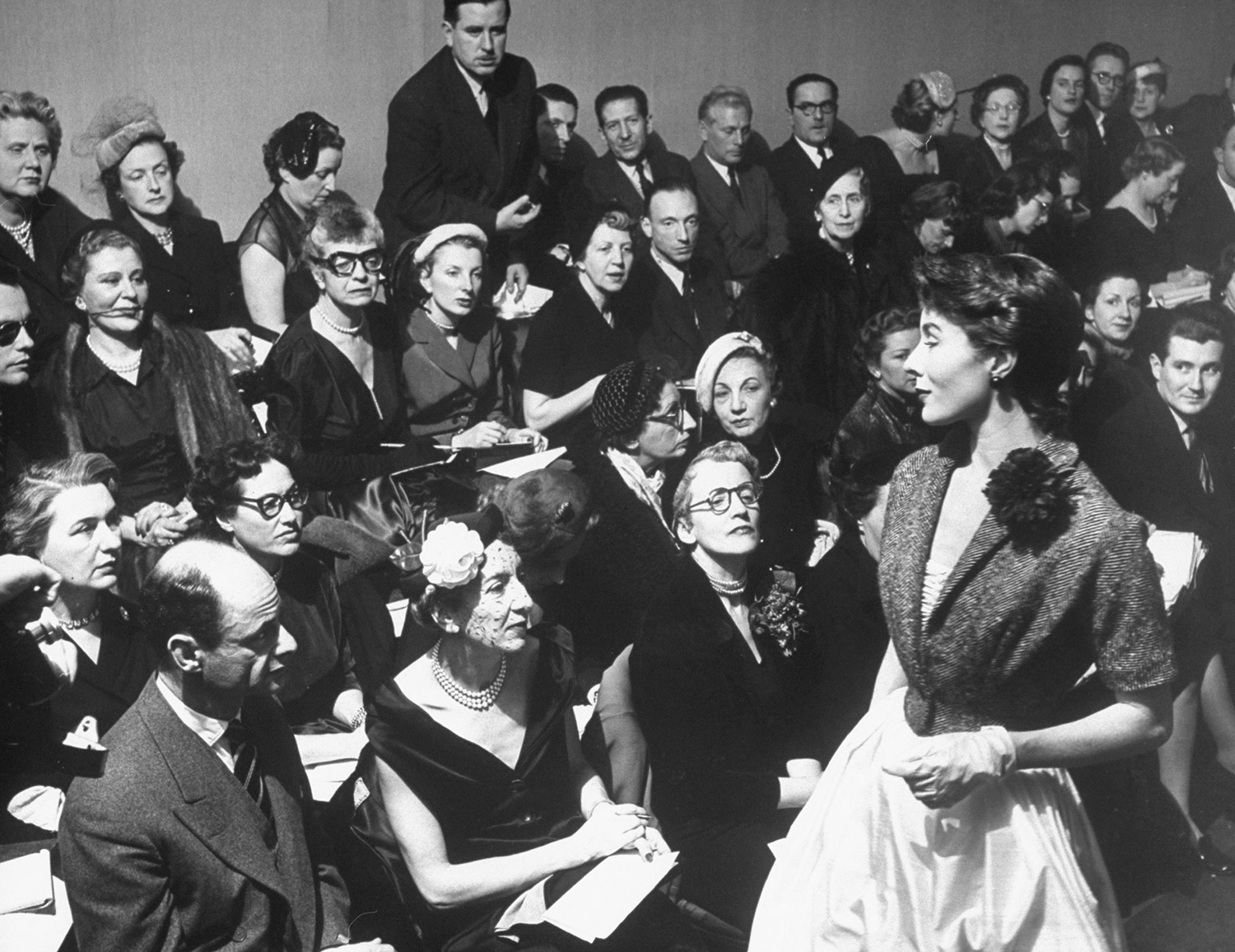
Givenchy's first collection released in 1952. (Life Magazine)
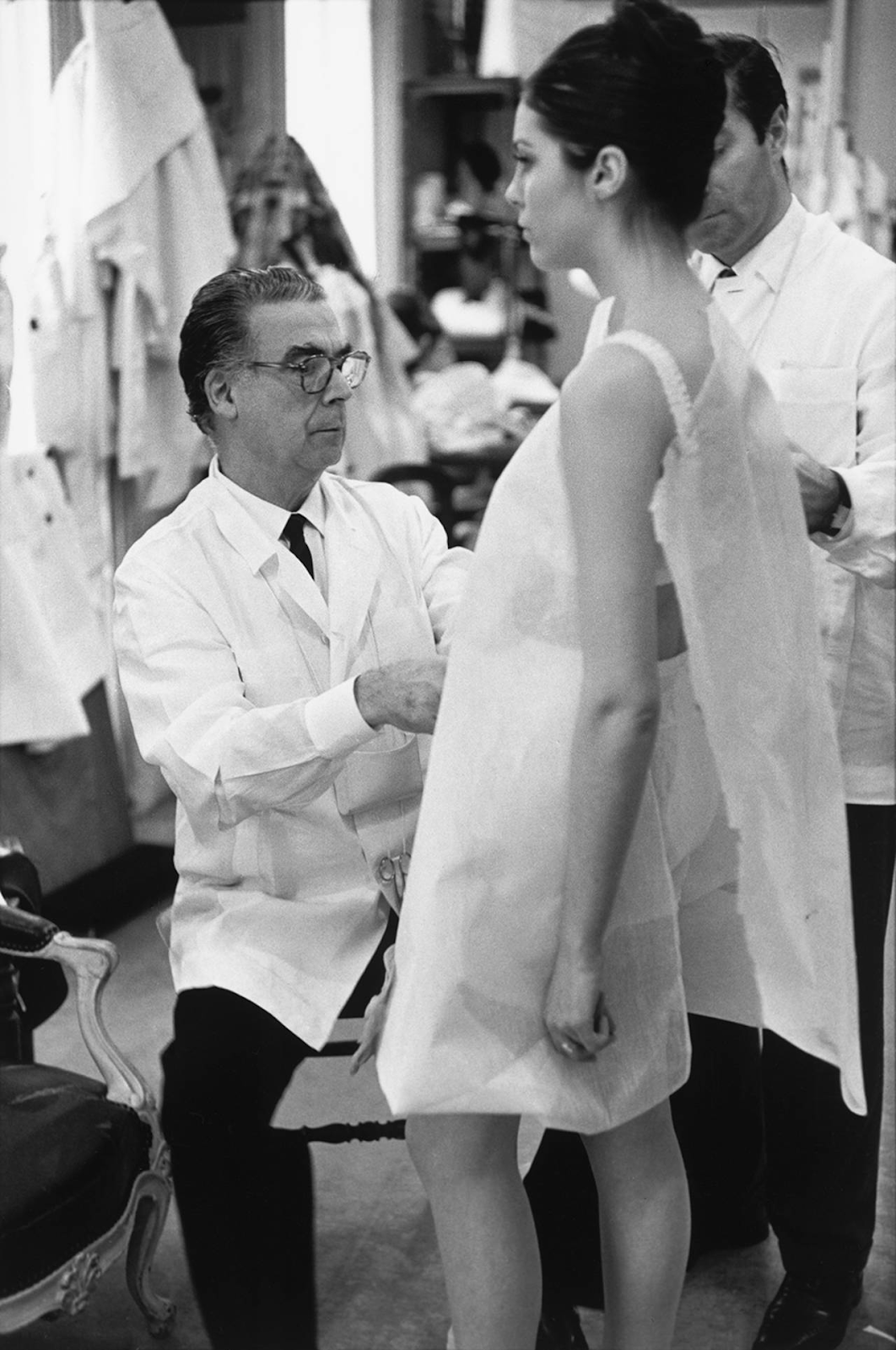
This is a British fashion writer's evaluation of Givenchy's first collection, fully embodying the unparalleled refinement and elegance behind the brand. As a legendary figure in the French haute couture world, Hubert de Givenchy is a renowned "gentleman designer" who combines traditional minimalist taste with bold modern creativity. Previously, we explored the entire Givenchy brand's origins and development, confirming Mr. Givenchy's achievements and contributions to the fashion world. However, behind every haute couture garment, his inspiration comes from a group of influential figures in the fashion, entertainment, and even political spheres.The Origin and Development of the BrandThis testifies to Mr. Givenchy's achievements and contributions to the fashion world. However, behind every haute couture garment, his inspiration comes from a group of influential figures in the fashion, entertainment, and even political spheres.
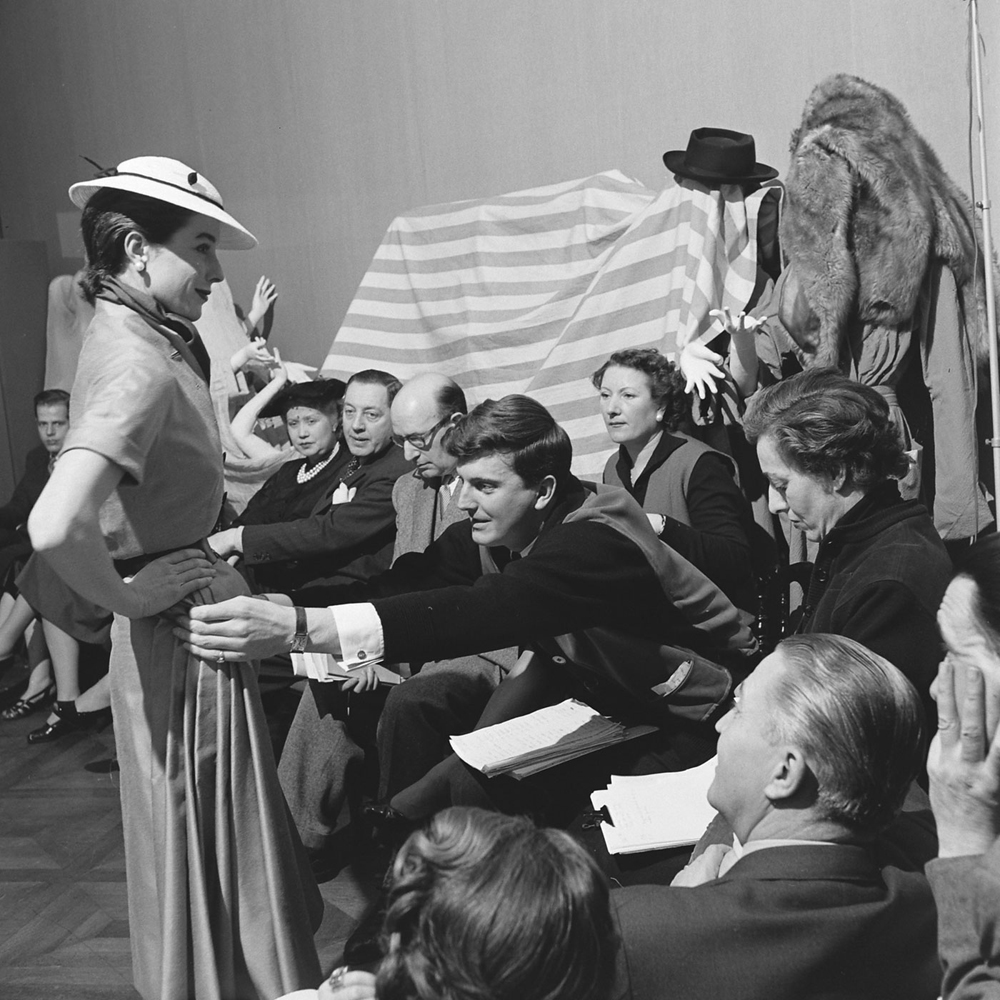
Mr. Givenchy adjusts the model's look. (Life Magazine)
Mr. Givenchy and his muses
In his more than forty years of design career, besides being influenced by the Italian surrealist designer Elsa Schiaparelli Besides being influenced by Jacques Fath, one of the most influential designers after World War II, Mr. Givenchy's inspiration often came from a host of "mummies." This article will introduce six "mummies" who laid the foundation for his minimalist design style, including Cristóbal Balenciaga, founder of Balenciaga; Coco Chanel; Jackie Kennedy; Wallis Simpson, Duchess of Windsor; Grace Kelly, Princess of Monaco; and his most impressive muse—British actress Audrey Hepburn.
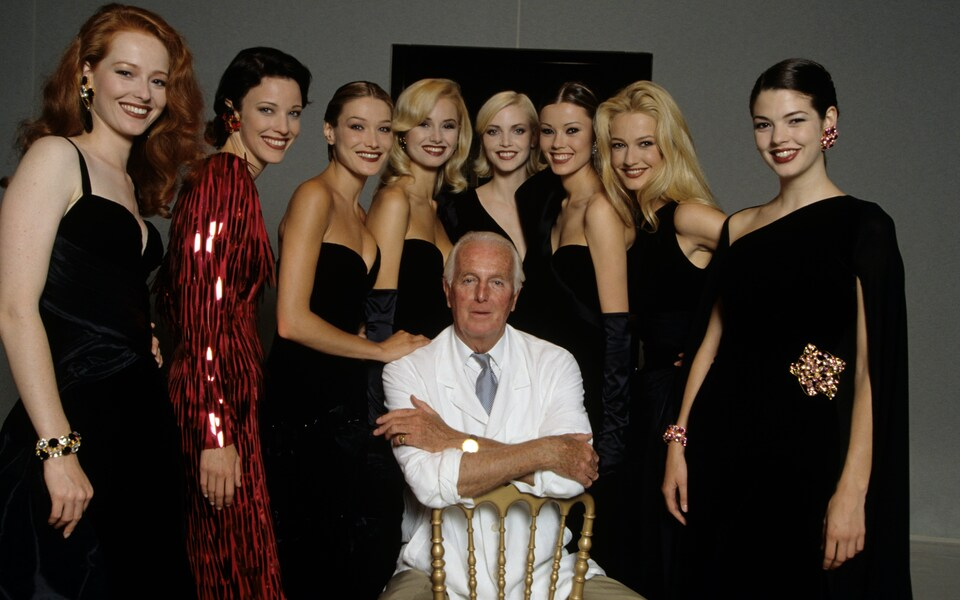
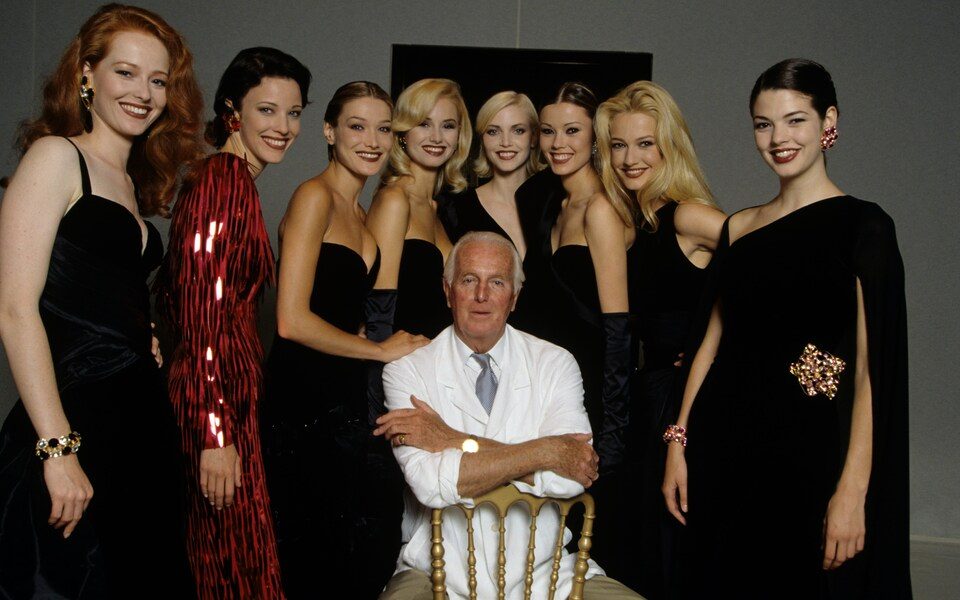
Mr. Givenchy's designs were inspired by numerous "mummies." (Jean-Claude Deutsche/Paris Match)
Cristóbal Balenciaga, founder of Balenciaga: A relationship even stronger than mentor and student
Although most people think of socialites and actresses when they mention Mr. Givenchy's mummies, if we really want to trace the roots of his design style, we must mention Mr. Givenchy's idol— Cristóbal Balenciaga, founder of Balenciaga. A review of records shows that the two never had a mentor-student relationship; in fact, when Mr. Givenchy first arrived at Balenciaga with design sketches, he was turned away. Nevertheless, they finally had the opportunity to meet and become acquainted after Mr. Givenchy founded his brand, and this Spanish designer, known as the "fashion architect," became Mr. Givenchy's most important mentor and close friend.
Mr. Givenchy's idol and friend – Cristóbal Balenciaga, founder of Balenciaga. (Henri Cartier-Bresson/Magnum Photos)
Unlike the controversial brands currently favored by Generation Z, Balenciaga's early works were influenced by Cristóbal Balenciaga... Under their guidance, the designs are known for their structural and architectural feel, with an artisan-like insistence on three-dimensional silhouettes. Both men admire flowing lines and understated elegance, making them an instant match, and these qualities became the core values of the Givenchy brand. Their designs uphold Balenciaga's simple, clean tailoring and attention to detail in embroidery and stitching; many fashion enthusiasts have noticed the similarities in the overall aesthetic between the two brands. Mr. Givenchy absorbed the essence of Balenciaga's fashion and Spanish tradition, adding classic French romantic style.

Balenciaga also attracted the support of socialites such as Grace Kelly and Wallis Simpson. (Disney+)
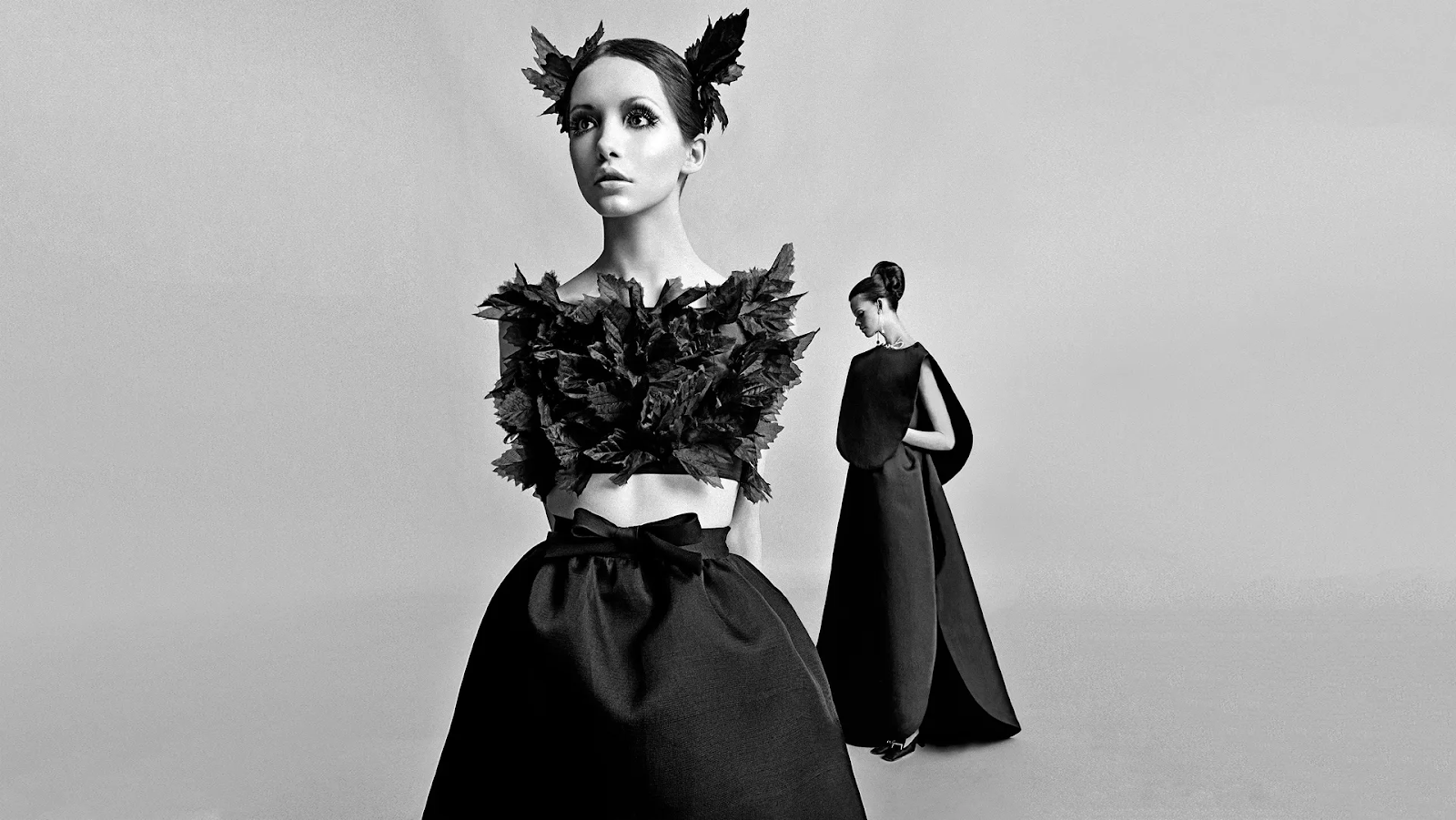
Cristóbal Balenciaga's work emphasizes structure and architecture. (Neal Barr)
When the two met, Balenciaga was already a renowned luxury brand, but Cristóbal Balenciaga... He remained generous in sharing his experience, speaking candidly about both fashion design and brand management. The two would even critique each other's collections before their own releases, a rarity in the fiercely competitive fashion world. When Mr. Givenchy spoke of his close friend, idol, and mentor, he openly stated, "Balenciaga taught me everything," even comparing Balenciaga to a religion, demonstrating the deep friendship between them and the profound influence Balenciaga had on Mr. Givenchy's design style.
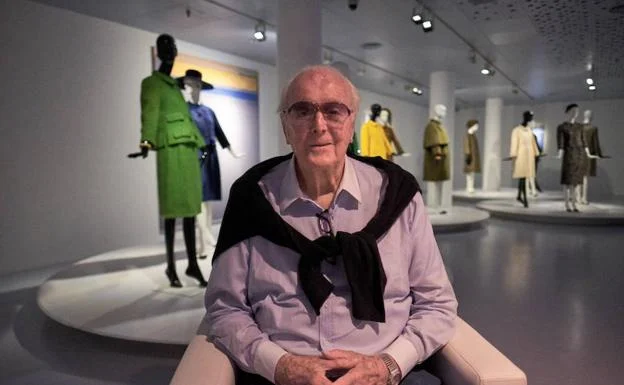
Mr. Givenchy visits the Balenciaga Museum. (El Diario Vasco)
Even after achieving fame, Mr. Givenchy maintained great respect for his mentor. In the 1950s, the Dior New Look was popular, with women's fashion primarily featuring hourglass dresses that accentuated the waist and hips, not representing a significant departure from pre-World War II trends. However, Mr. Givenchy and Mr. Balenciaga collaborated in 1957, simultaneously launching the Sack... The silhouette garment, with its straight, waistless design, minimized the waistline, freeing women who were already voting and working from the constraints of corsets and narrow waists. This revolutionary design sparked widespread discussion, receiving polarized reviews at the time, but undoubtedly became one of the classic looks for both brands, even inspiring the miniskirt that emerged in the 1960s.
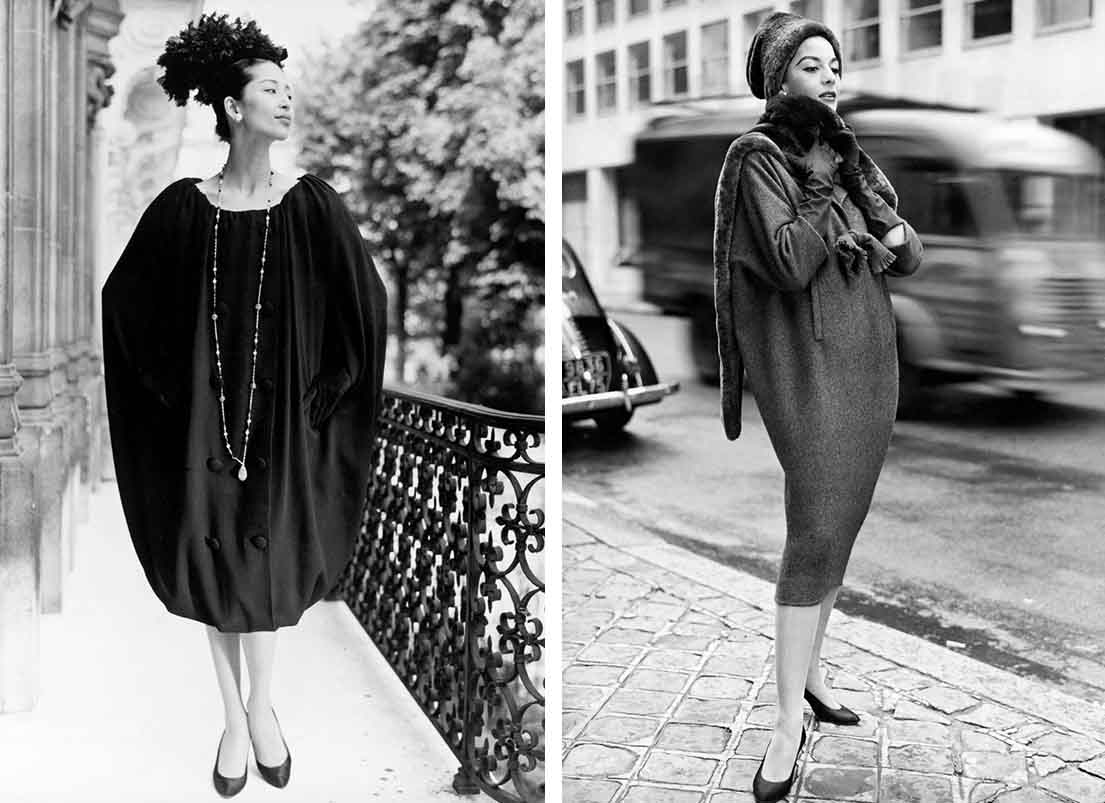
Givenchy and Balenciaga launched the Sack silhouette garment in 1957, the same year. (Givenchy)
Many people believe that money is the touchstone of friendship, and that discussing money between friends damages relationships. However, Balenciaga truly shared everything he had, even generously sharing client and business advice. In 1968, when Balenciaga decided to discontinue haute couture, he chose to recommend his VIP client Bunny Mellon to Mr. Givenchy's brand, and this American gardener and fashion icon became one of Givenchy's biggest buyers. Cristóbal Balenciaga accepted... Following his suggestion, Mr. Givenchy applied for a trademark for the brand in 1969 to protect the Haute Couture collection and ensure the continuation of the brand's exquisite craftsmanship.
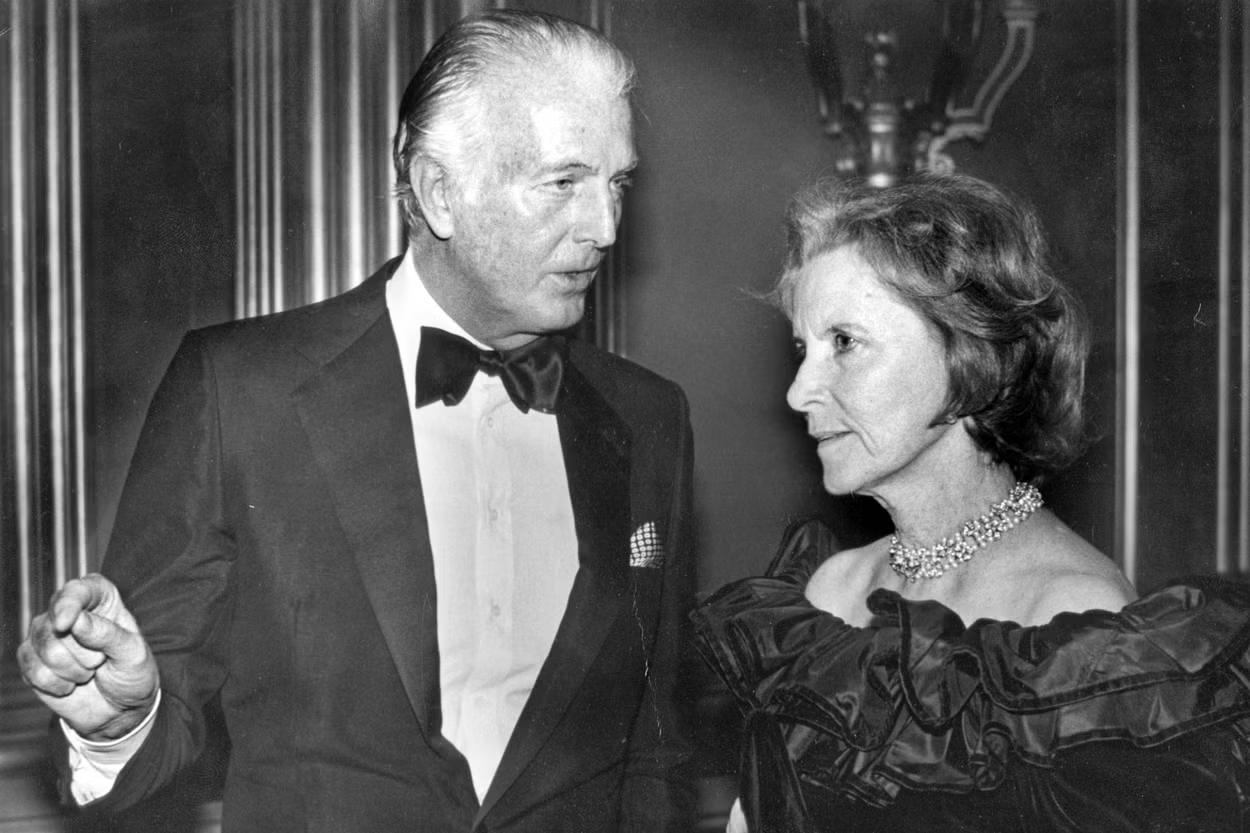
One of Mr. Givenchy's biggest buyers – Bunny Mellon. (Washington Post)
Coco Chanel: The originator of the little black dress
When discussing the iconic looks created by Mr. Givenchy, the little black dress is undoubtedly a timeless legend. While Coco Chanel was the originator of the little black dress, bringing its minimalist design to the American edition of Vogue magazine in 1926 and overturning the then-prevailing notion that the little black dress was only for mourning, Mr. Givenchy brought it to the international silver screen, creating one of the most iconic costumes in film history. In the film *Breakfast at Tiffany's*, the scene where the protagonist, Holly Golightly, wears a minimalist black silk dress and gazes at jewelry through a shop window is not only a tribute to Chanel's original design by Mr. Givenchy, but also solidified the little black dress's timeless status.
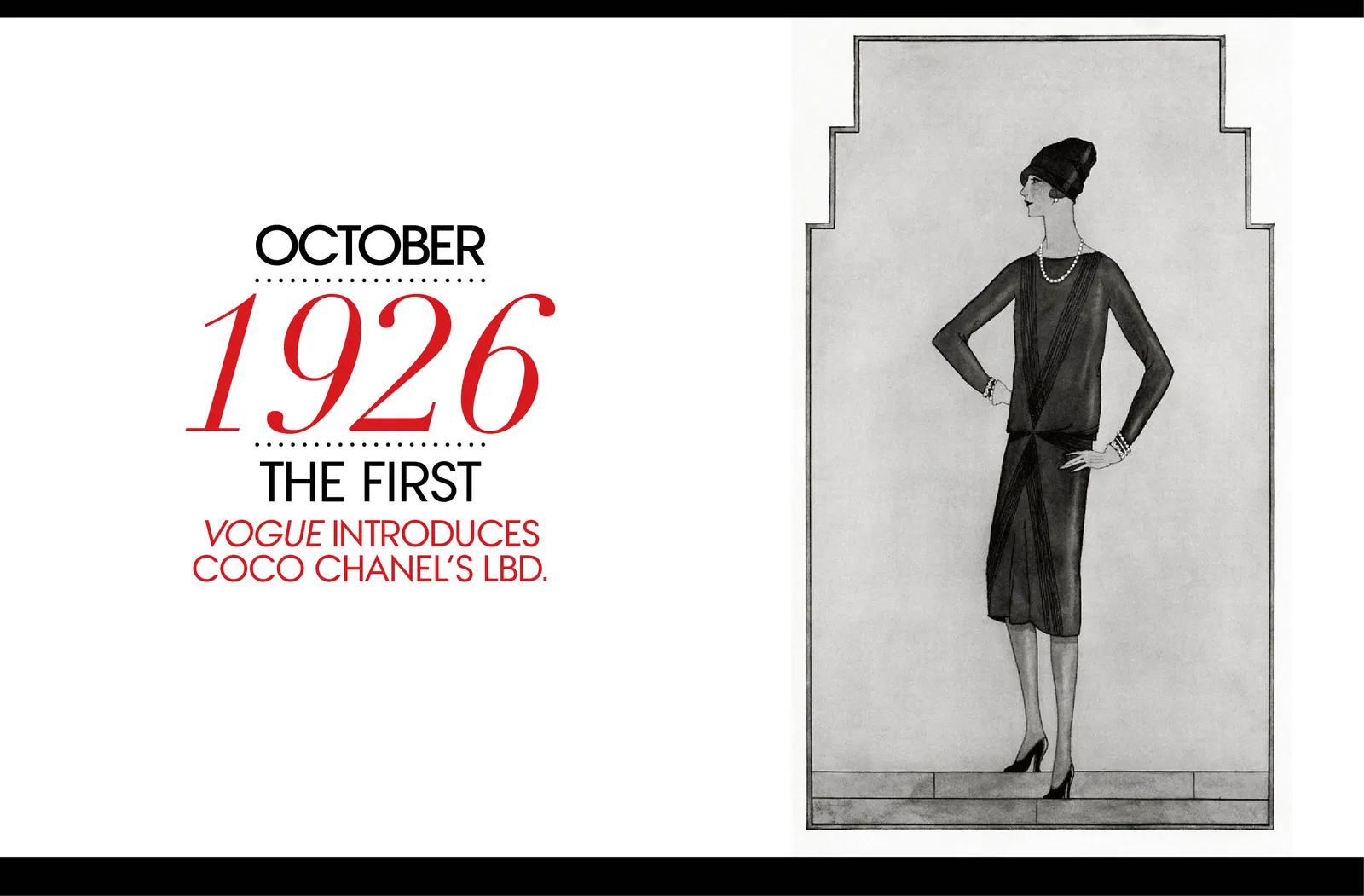
In 1926, Coco Chanel first introduced the little black dress to the American edition of Vogue magazine. (Vogue)
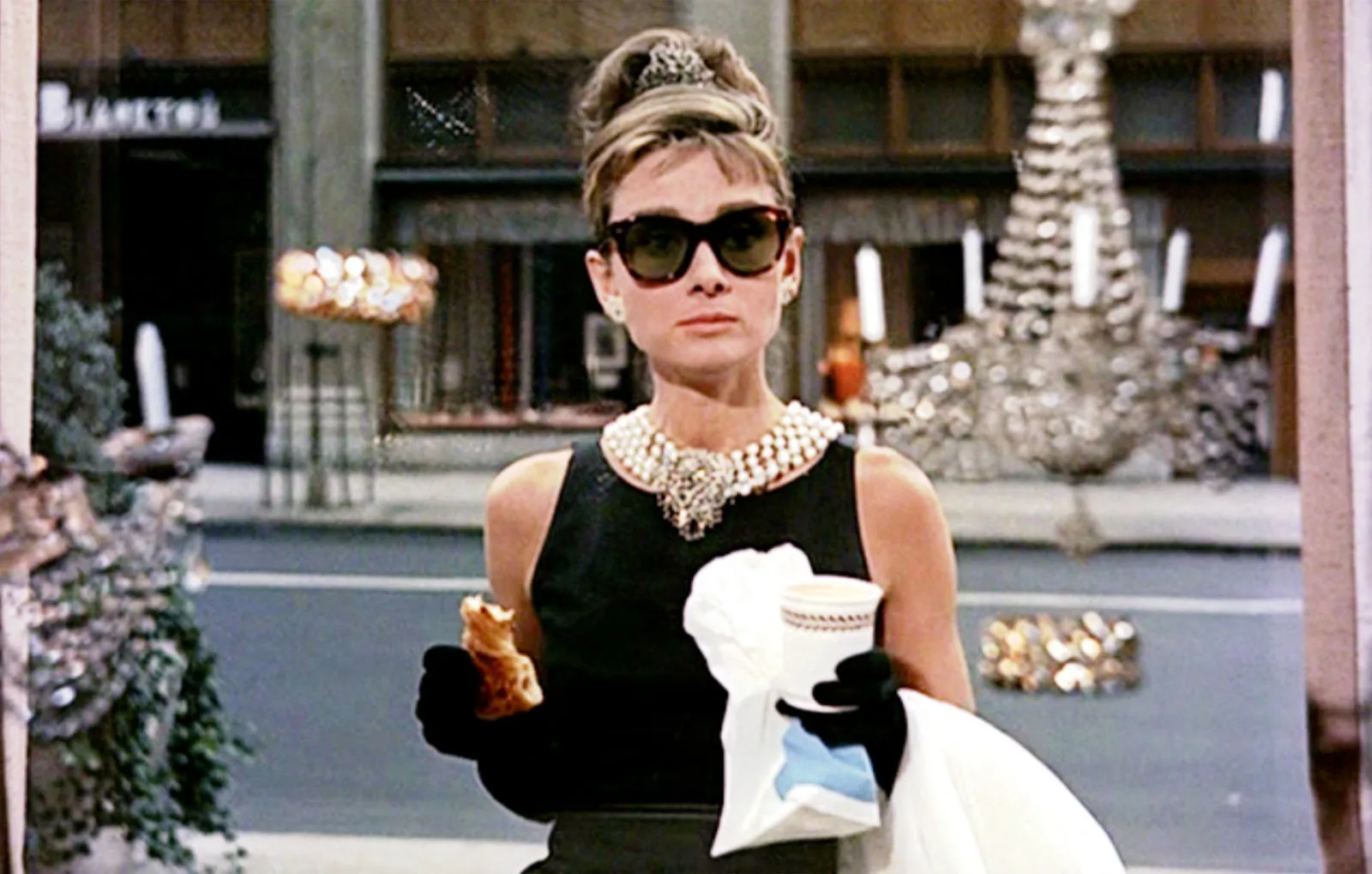
The scene in the movie *Breakfast at Tiffany's* where the protagonist Holly Golightly wears a little black dress has become a classic. (Jurow-Shepherd)
) Coco Chanel's designs balanced elegance and practicality, believing that women's clothing should provide comfort while showcasing beauty—a philosophy that resonated with Mr. Givenchy's fashion philosophy. As the first haute couture designer to launch a ready-to-wear collection, he didn't just want to create gowns for high society socialites. Therefore, "Givenchy Université" was born in 1954, introducing machine-made fashion from the United States. Comparisons between the two brands are frequent, but Coco Chanel's unconventional style had an undeniable influence on Mr. Givenchy and the entire fashion world. She paved a new path for herself and contemporary women, while Givenchy continued her spirit and infused it with his own unique aesthetic.
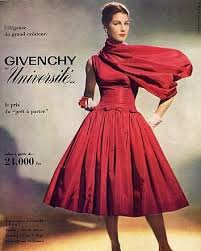
Mr. Givenchy launched "Givenchy Université" in 1954. The "Université" series. (Guy Arsac)
) Afterwards, the little black dress craze swept the globe, with many designers attempting new variations, allowing this simple fashion item to evolve over the past century. Whether it's fast fashion brands or luxury brands like Christian Dior, Versace, Oscar De La Renta, and Saint Laurent, the little black dress appears every season, injecting new ideas into the traditional dress. Even Karl Lagerfeld, Coco Chanel's successor, after becoming the brand's creative director, repeatedly reinterpreted classic designs, pairing them with different materials and jewelry. Furthermore, Princess Diana, a fashion icon of the British royal family, also appeared at a party in a groundbreaking "revenge little black dress." Her sexy, form-fitting outfit deviated from royal protocol and was seen as revenge for Charles's infidelity, further solidifying her bold fashion style. ( Karl LagerfeldAfter becoming the brand's creative director, she has repeatedly reinterpreted classic designs, pairing them with different materials and jewelry. Furthermore, Princess Diana, a fashion icon of the British royal family, once appeared at a party in a groundbreaking "revenge little black dress." Her sexy, form-fitting outfit deviated from royal protocol and was seen as revenge for Charles's infidelity, further solidifying her bold fashion style.
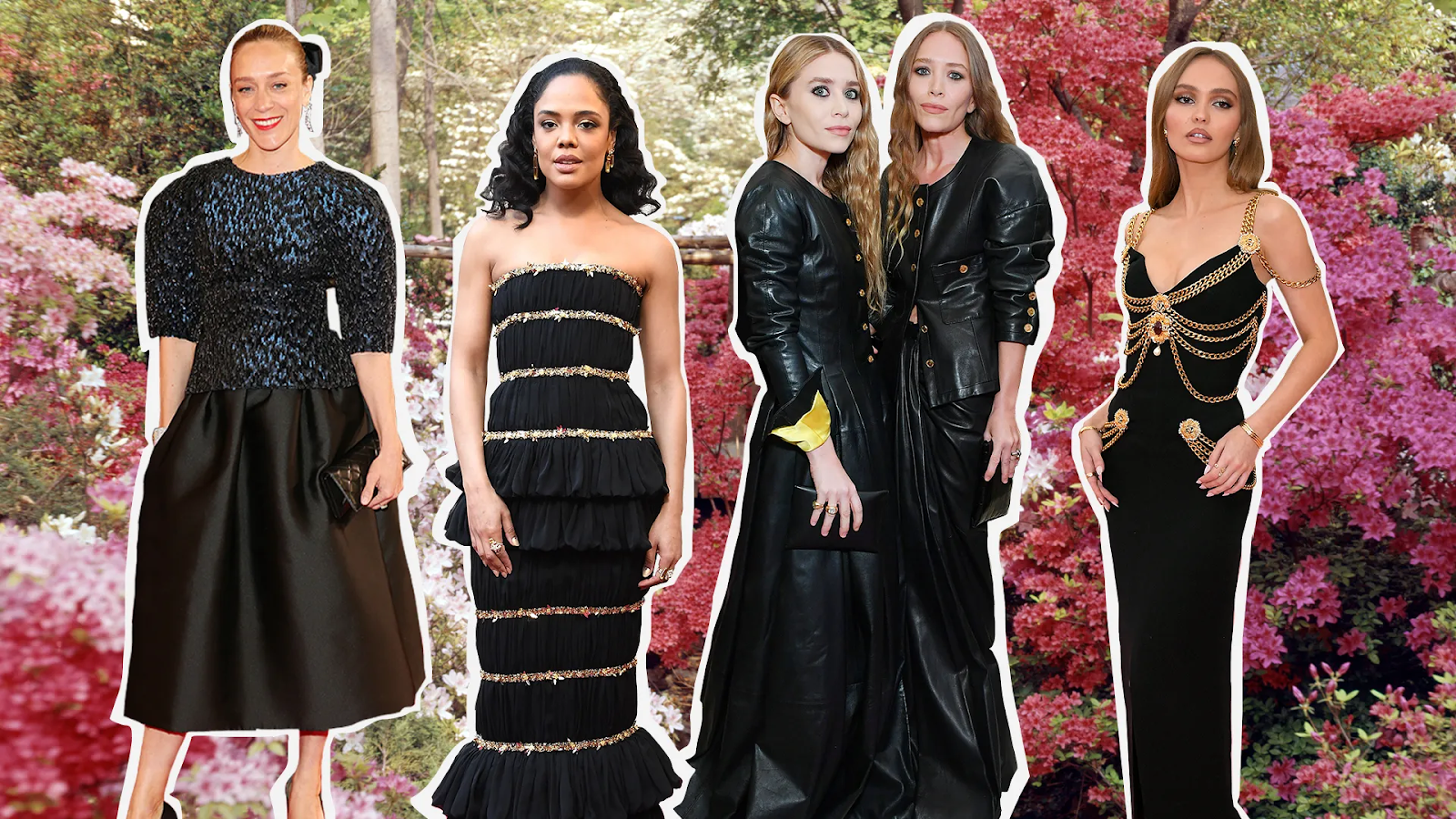
) Karl Lagerfeld And major luxury brands have repeatedly reinterpreted the little black dress. (Vogue)
) Jackie Kennedy: The First Lady's Extraordinary Taste
Jackie Kennedy, one of the most influential women in American history, is known as the "Eternal First Lady of the United States." Her remarkable life experiences and elegant demeanor have made her a representative of independent women. As a fashion icon of the 1960s, her sophisticated taste became a model for women worldwide. She also brought fashion into politics and achieved numerous successes in the arts and culture. Before becoming First Lady, Jackie Kennedy studied at the University of Paris and developed a deep passion for French fashion, particularly Givenchy, Chanel, and Balenciaga. Furthermore, Mrs. Kennedy particularly admired Audrey Hepburn. Hepburn, therefore, also had a fondness for Mr. Givenchy's designs.
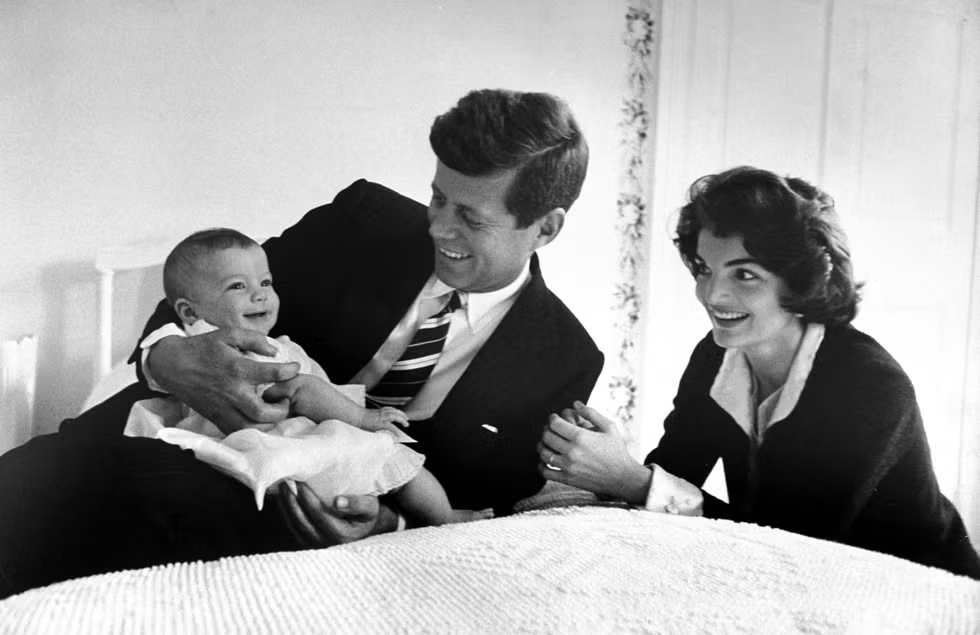
The Kennedy family. (Getty Images)
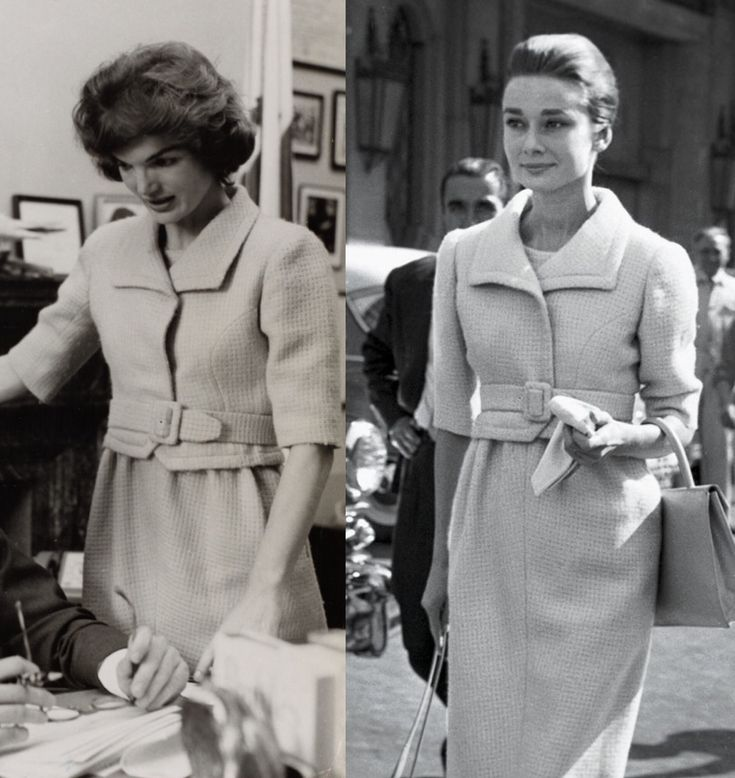
Mrs. Kennedy particularly admired Audrey Charping and also had a fondness for Mr. Givenchy's designs. (Pinterest)
Although after Mrs. Kennedy entered the White House, in response to public expectations, she mostly chose works by American designers and invited the popular Russian-American designer Oleg Cassini to create a suitable wardrobe for her, she frequently appeared in Givenchy suits during international diplomatic activities, conquering the world with "fashion diplomacy." In particular, during her visit to France in 1961, she accompanied her husband, John F. Kennedy, to Versailles Palace to meet President Charles de Gaulle in an ivory embroidered evening gown and her signature white gloves. They dined together. President Kennedy was amazed by the outfit and jokingly remarked during his speech that he was the one accompanying the First Lady. It is said that the outfit even received praise from the French President, who stated that it perfectly represented Parisian fashion taste.
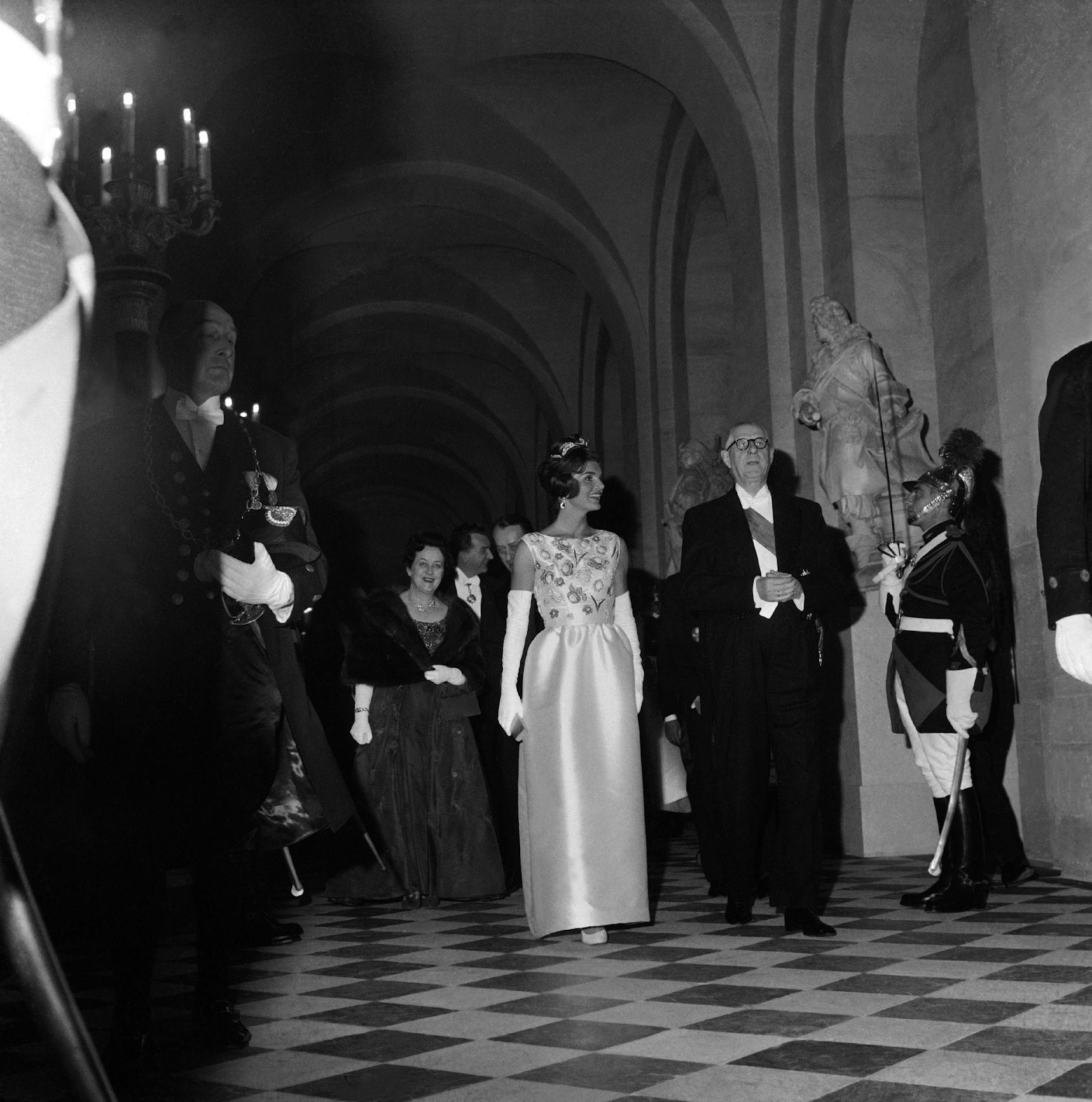
When Mrs. Kennedy and her husband met with the French President at Versailles Palace, she again wore a Givenchy design. (Getty Images)
Another look that attracted global attention was the mourning dress she wore to her husband Kennedy's funeral. In 1963, Kennedy was assassinated during his Texas campaign; Givenchy first... Entrusted with the task of dressing the entire family within just three days, Mrs. Kennedy appeared in a simple black suit and mesh veil, displaying remarkable strength and elegance. Broadcast globally by the news media, this historic moment brought Givenchy's designs back into the spotlight. Through Mrs. Kennedy's taste, the brand's elegant image was disseminated across Europe, further solidifying its fashion status.
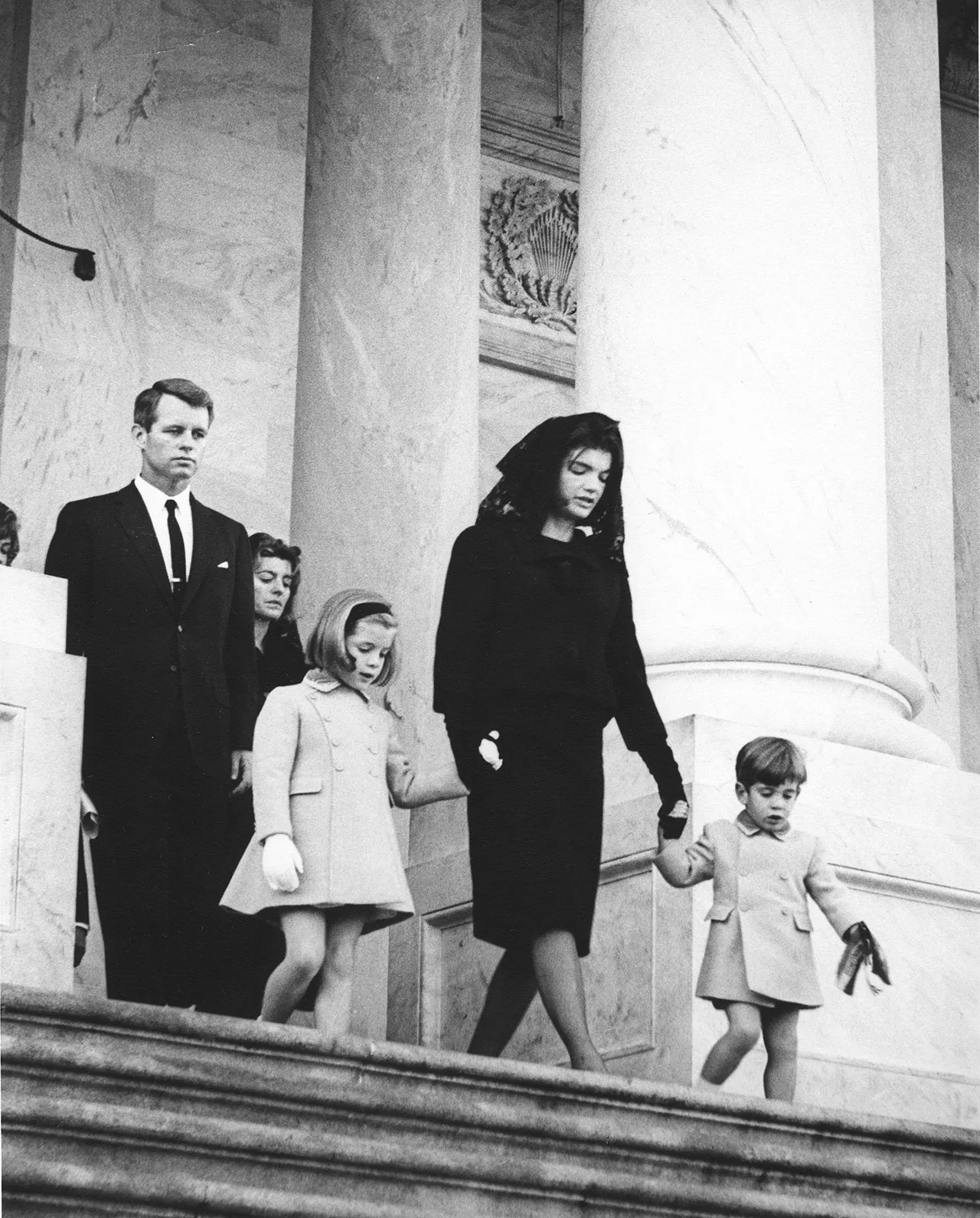
After her husband's assassination, Mrs. Kennedy's mourning attire was also designed by Mr. Givenchy. (Getty Images)
Duchess of Windsor Wallis Simpson: Loyal Support Amidst Controversy
The Duchess of Windsor, Wallis Simpson, is an American socialite with countless rare jewels and haute couture pieces, but she is most celebrated for her marriages and love story. When she met Edward VIII, this American woman had already been married twice, yet this did not deter the British king, who abdicated for her, becoming the shortest-reigning monarch in British history. Although she was granted the title of Duke of Windsor, she was forbidden from entering British territory for the rest of her life. The Duchess of Windsor has long been branded a villain by the British media, but her wisdom is evident in her exceptional taste.
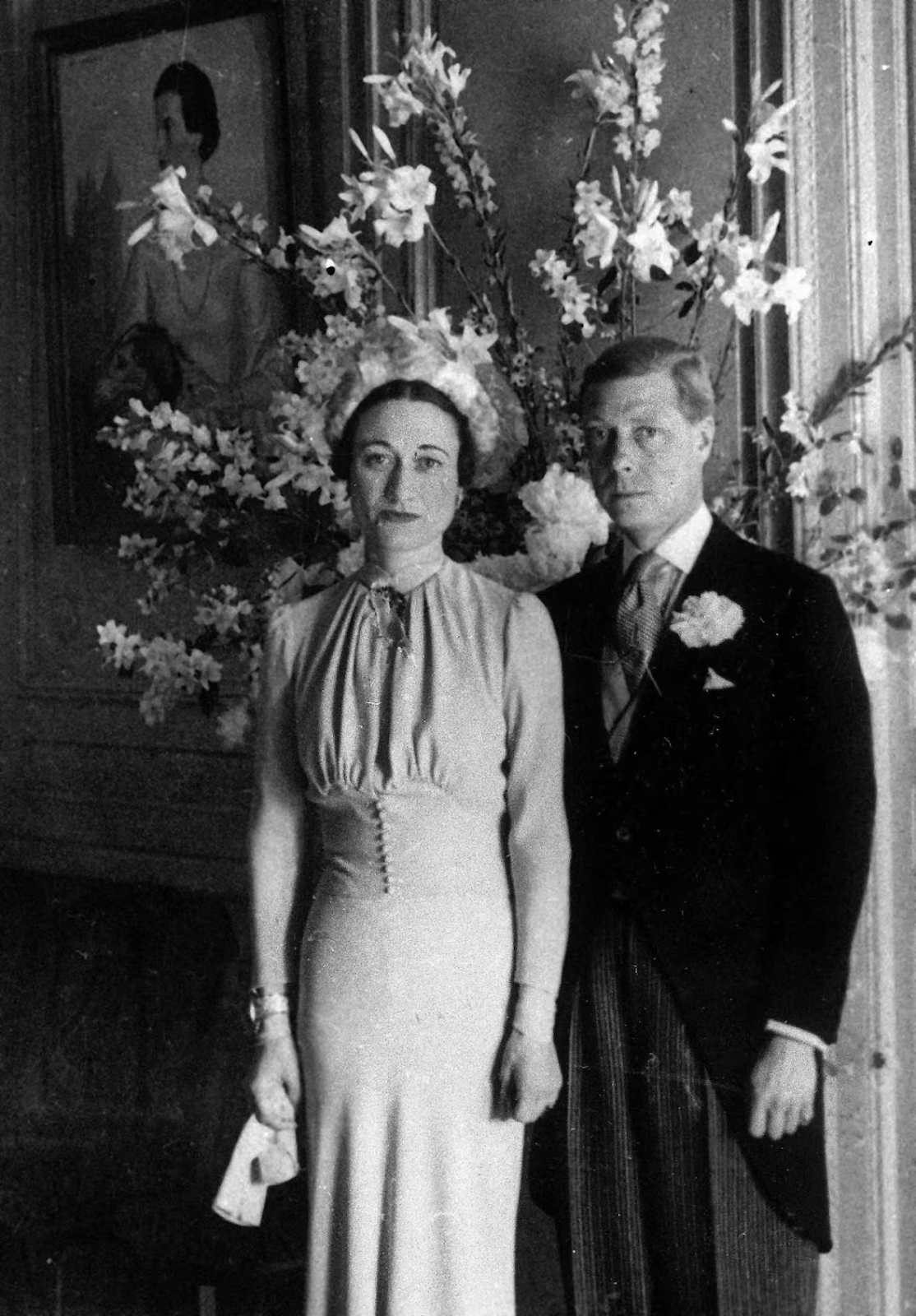
The Duke and Duchess of Windsor. (Associated Press)
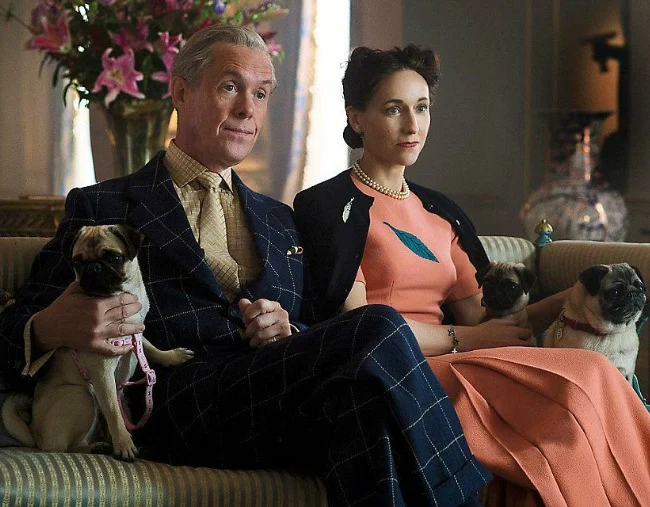
The story of the Duke and Duchess of Windsor was even documented in the Netflix television program "The Crown."Netflix)
Knowing from a young age that she wasn't particularly beautiful, Wallis Simpson aspired to be the most stylish woman, dedicating herself entirely to clothing and jewelry design, thus becoming a loyal supporter of Monsieur Givenchy. Monsieur Givenchy, wholeheartedly devoted to pleasing his clients, also kept each client's preferences, body type, and needs in mind, truly embodying haute couture. After the 1960s, the Duchess of Windsor almost exclusively wore gowns designed by Monsieur Givenchy, becoming the center of attention at high-society parties. It is said that when the Duke of Windsor passed away in 1972, the Duchess immediately informed Monsieur Givenchy, and the already renowned designer lived up to expectations, creating a mourning dress for her overnight, a black double-breasted suit to bid a dignified farewell to her husband.
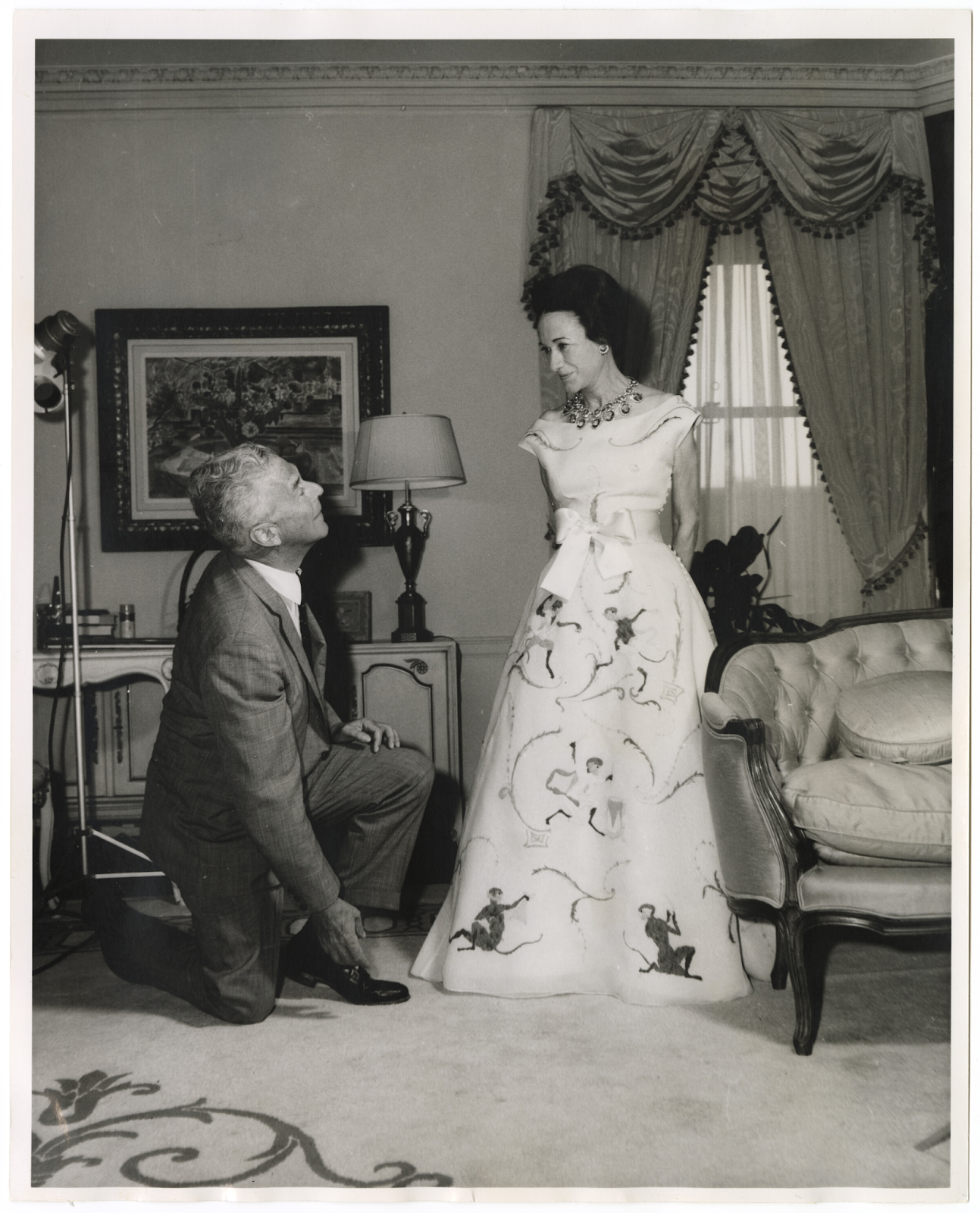
The Duchess of Windsor wearing a "Monkey Dress" designed by Monsieur Givenchy. (Bradford Bachrach)
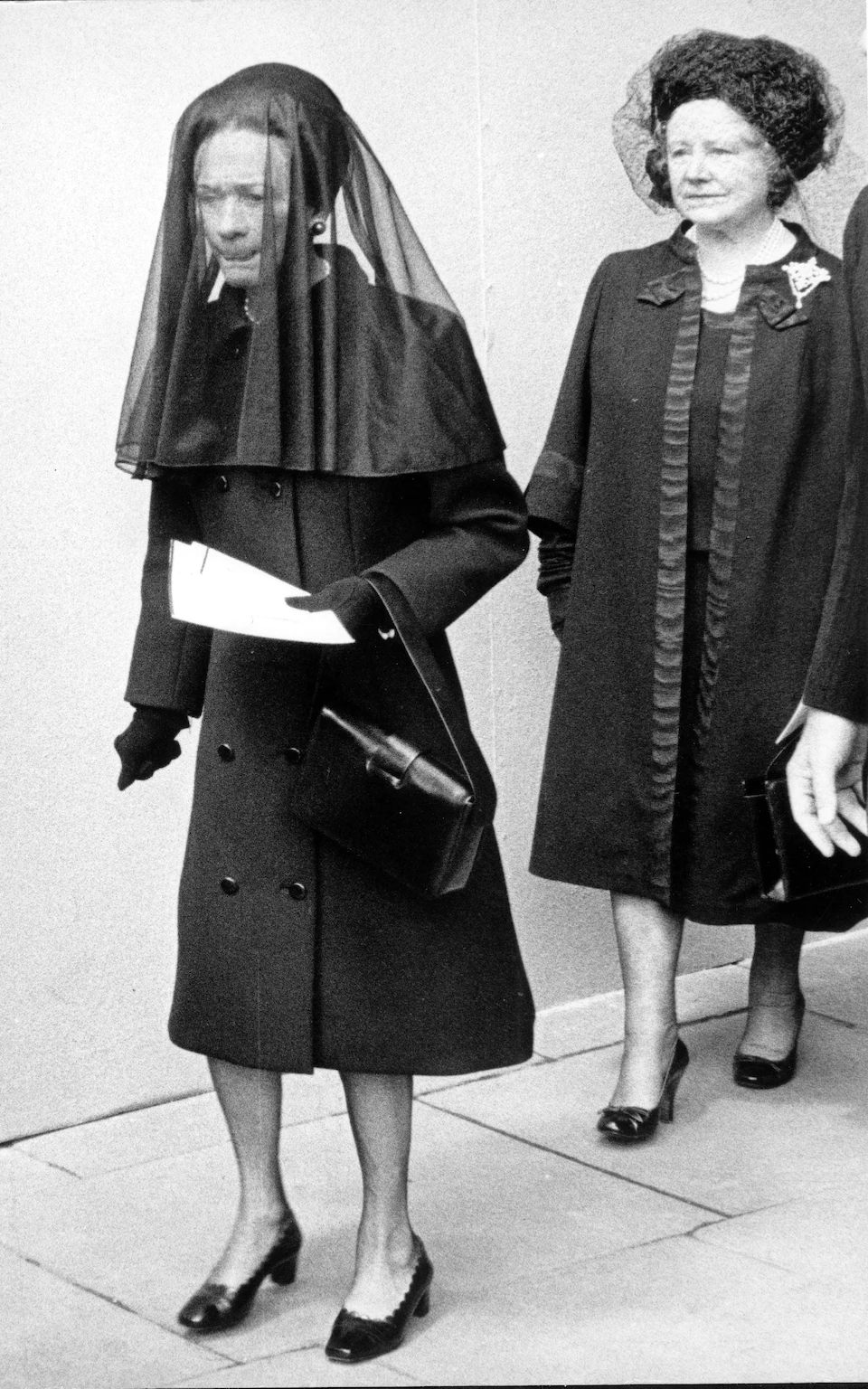
Mr. Givenchy made the mourning dress for the Duchess of Windsor overnight. (PA)
Princess Grace Kelly of Monaco: A Synonym for Nobility and Elegance
Princess Grace Kelly of Monaco was also a fashion icon with a legendary life. From Oscar-winning actress to the Monaco royal family, her pursuit of nobility and elegance remained constant. Her collaboration with Givenchy began during her film career and continued until the important moment when she became a princess. Besides the Hermès Kelly Bag named after her, this "eternal princess" exuded a generous and elegant charm. The simplest cuts could showcase her unparalleled elegance, consistent with Mr. Givenchy's design philosophy, creating many timeless classic looks.
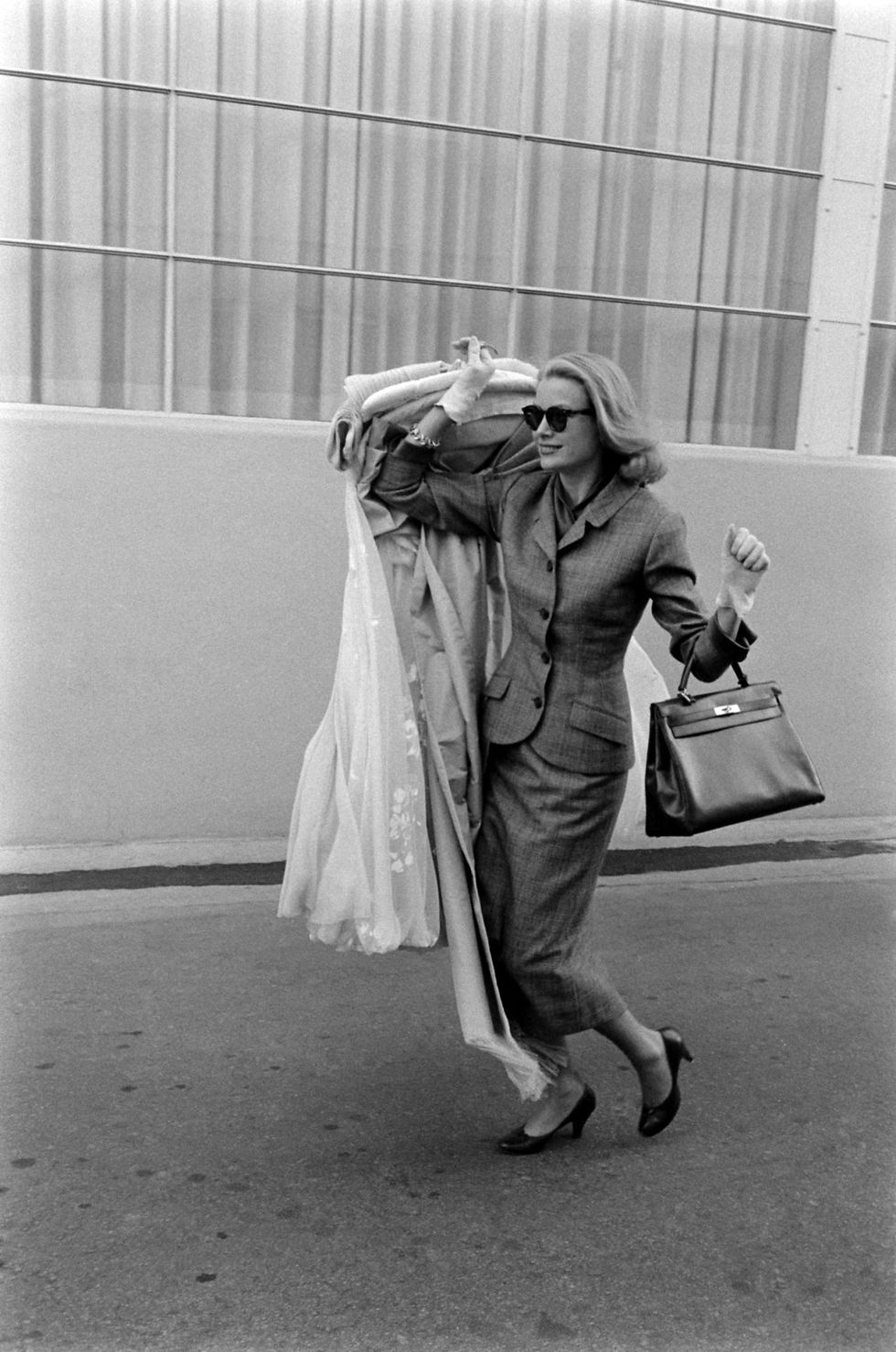
Hermès named "Kelly" after Grace Kelly. The "bag" alone demonstrates Princess Grace Kelly's status in the fashion world.Getty Images)
Her Givenchy green suit worn during her meeting with President Kennedy and his wife at the White House in 1961 was even recognized by President Kennedy as a design by Mr. Givenchy, showing that even political elites cannot resist the allure of exquisite craftsmanship. Looking back on Grace Kelly's life, as a descendant of Irish descent, Princess Grace Kelly particularly loved green clothing, believing the color represented hope and good fortune. Whether at award ceremonies, St. Patrick's Day in Ireland, or diplomatic events, her bright presence was always a striking sight. The Givenchy green suit was even worn again by the princess that same year, and this timeless and chic look even fetched a high price of $650,000 at auction, demonstrating the combined appeal of Mr. Givenchy's designs and the princess's charisma.
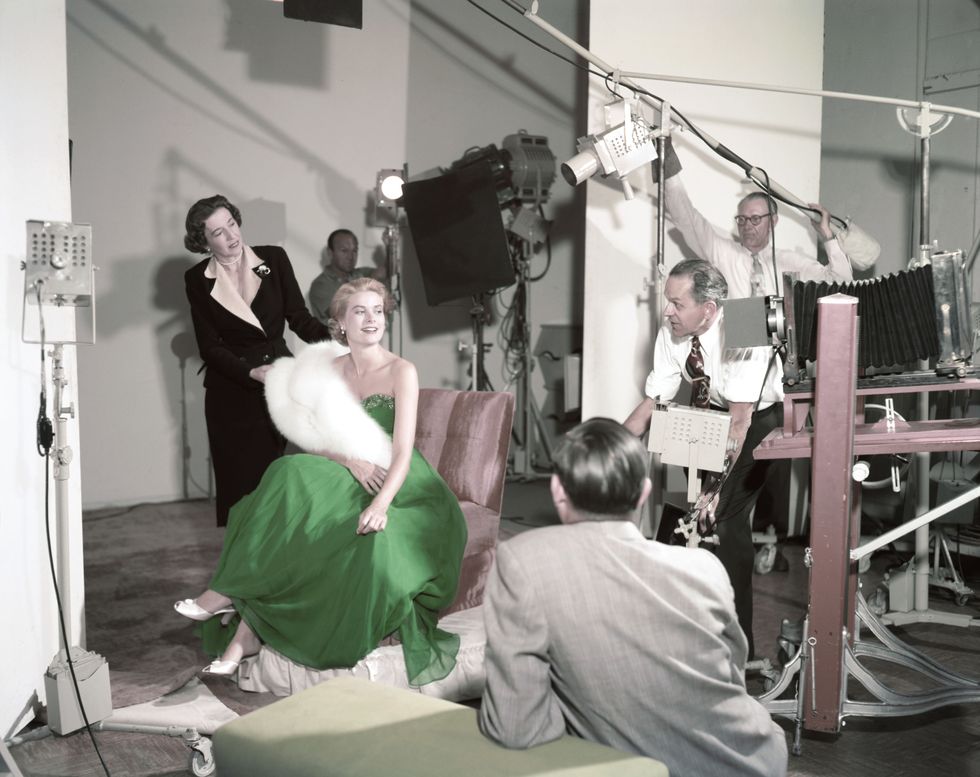
Grace Kelly She especially loved green. (Getty Images)
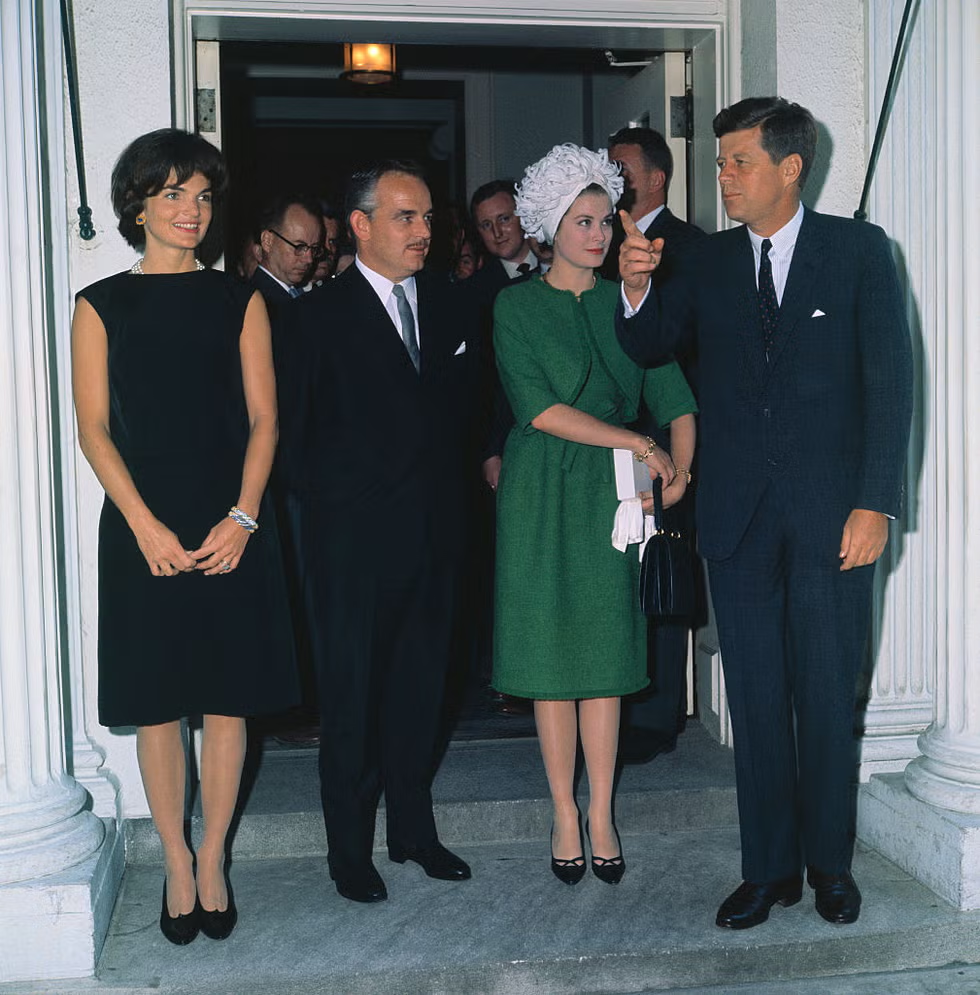
Grace Kelly met with President Kennedy and his wife wearing a Givenchy green suit. (Getty Images)
Audrey Hepburn: The Eternal Muse
Finally, we must mention the famous British actress and humanitarian Audrey Hepburn. From the time the two met in 1953, Mr. Givenchy personally designed almost all of the actress's costumes for her films, important moments in her life, and even her children's christening. Hepburn once said, "Givenchy created me," and Mr. Givenchy responded that Hepburn showed him the new life of clothing. The two supported each other for forty-two years, but in fact, when they first met, Mr. Givenchy had just started his studio and had no time to design costumes for Hepburn, so he could only choose from the existing collections. However, it was precisely this dress embroidered with classic 18th-century flowers that became the inspiration for the film *Sabrina*. The iconic look in *Sabrina* earned Mr. Givenchy an Academy Award for Best Costume Design, marking the beginning of their long-term collaboration.
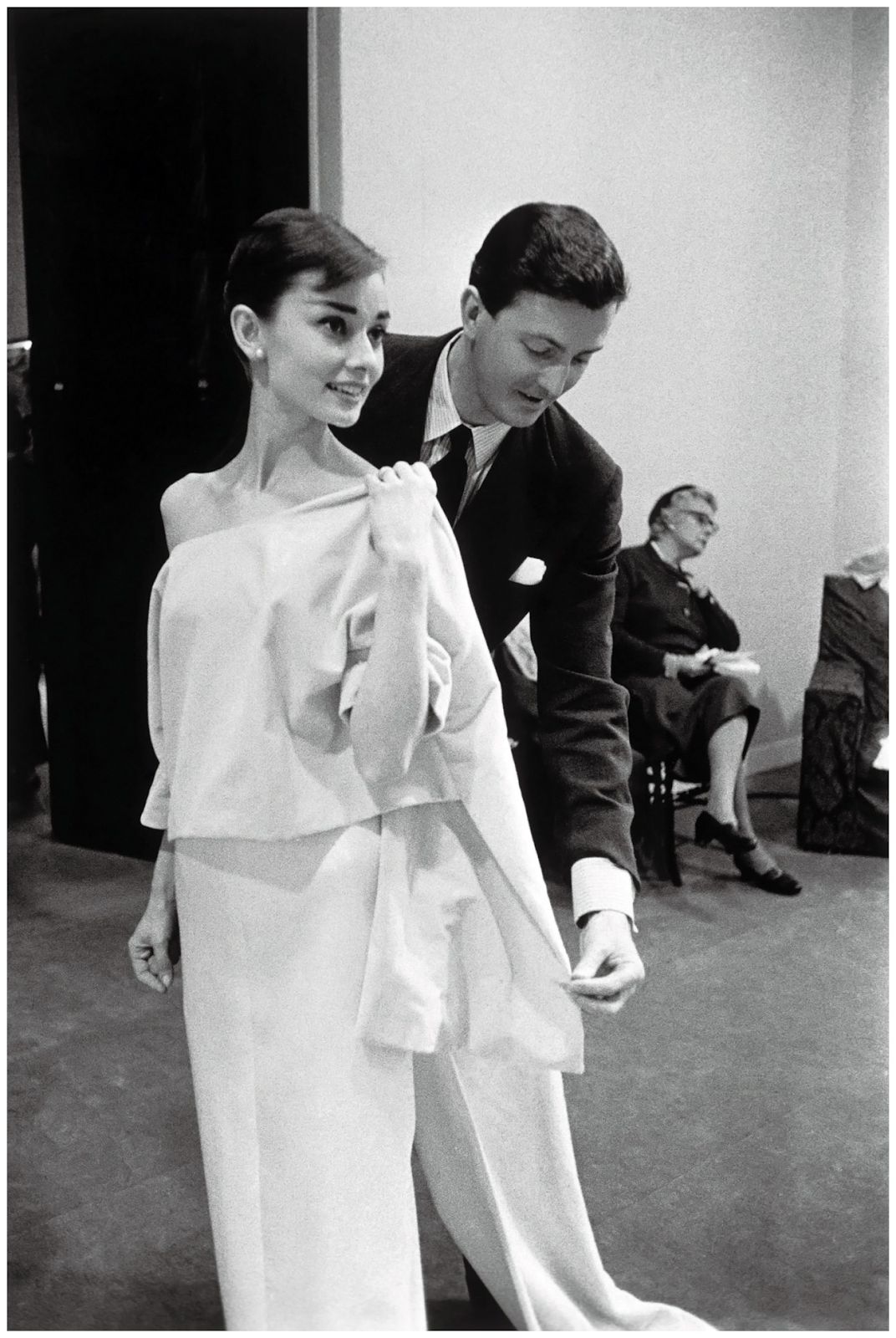
Mr. Givenchy and Audrey Hepburn met in their twenties. (Vogue)
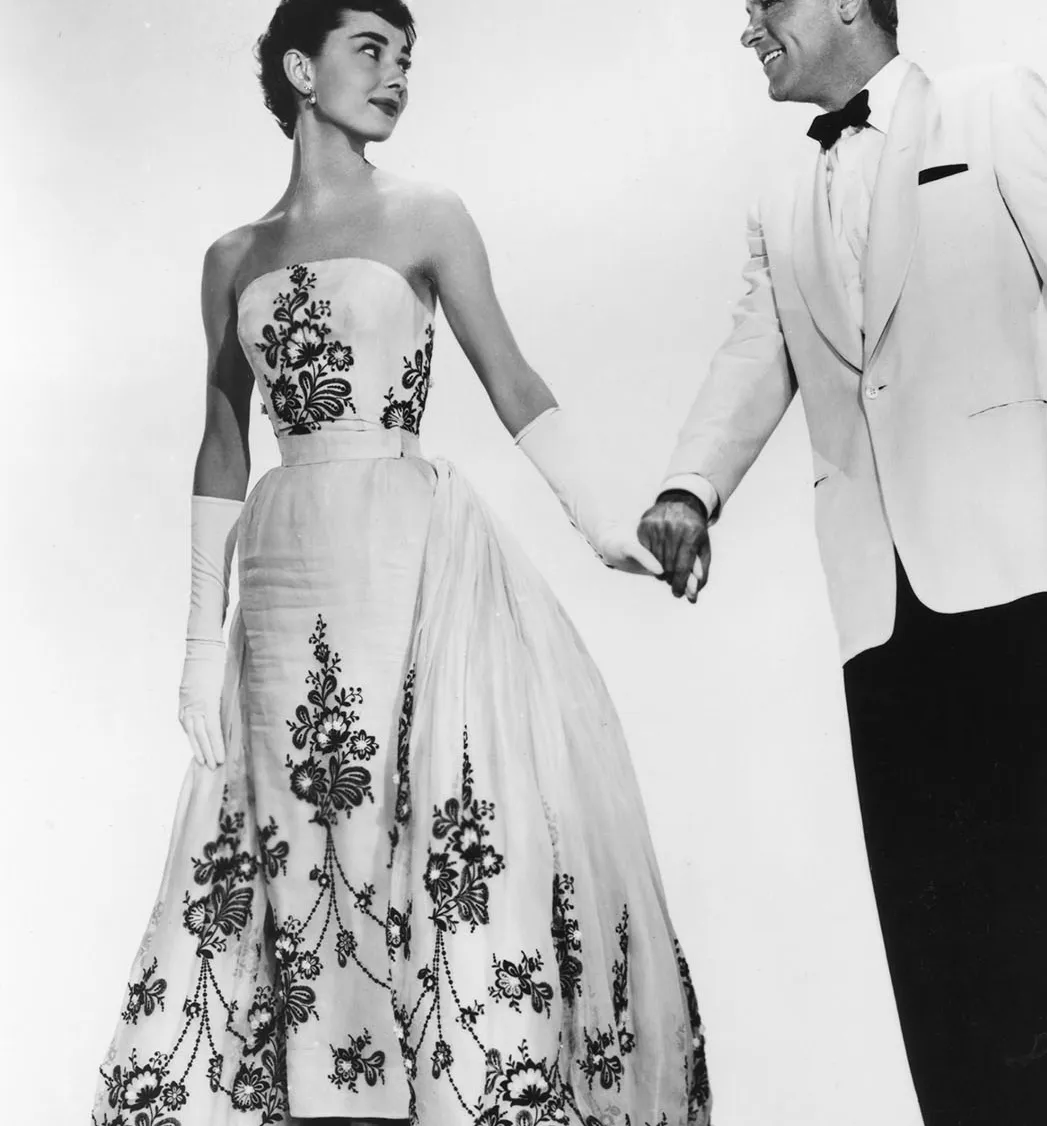
Mr. Givenchy's first collaboration with Audrey Hepburn resulted in the iconic look for the film *Sabrina*. (Photofest)
Their relationship has always been the subject of speculation, but Mr. Givenchy described it as Platonic, even comparing it to a kind of marriage. Their soulmate-like connection allowed them to achieve perfect communication. The only time they disagreed was when Mr. Givenchy refused to lower the bust line of Hepburn's dress, solely to protect her elegant image. This relationship transcended the boundaries of designer and client; Hepburn would even call Givenchy in the early hours of the morning. In the studio, the phone rang three times before hanging up, a gesture meant to express "I love you" to a close friend. This thoughtful and playful act was simply to encourage Mr. Givenchy while he was working, a way to express his longing without disturbing him.
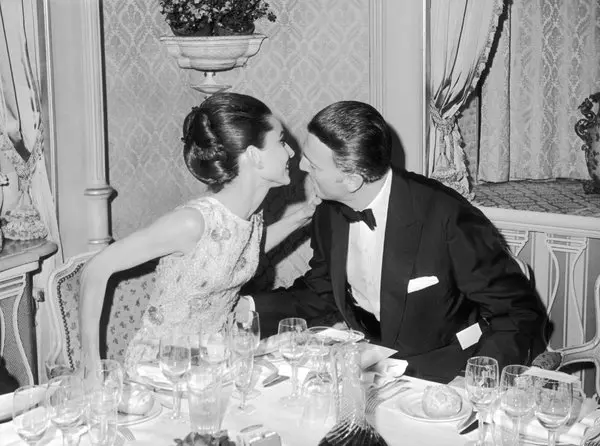
The relationship between Mr. Givenchy and Audrey Hepburn was like that of soulmates. (Getty Images)
After Hepburn's passing from cancer, Mr. Givenchy gradually reduced his workload, retiring from the limelight to a simpler life. However, many years after his retirement, he returned with his personally illustrated picture book, "To Audrey with..." "Love," a book dedicated to a close friend's life. In 2014, an exhibition about Audrey Hepburn publicly displayed her treasured picture books, including over a hundred design sketches and Hepburn's stunning looks in films. As a muse coveted by every designer, Hepburn incorporated Mr. Givenchy's style into her life. This genuine friendship transcended romantic love; they not only complemented each other but also mutually enhanced each other's lives, making it truly enviable.
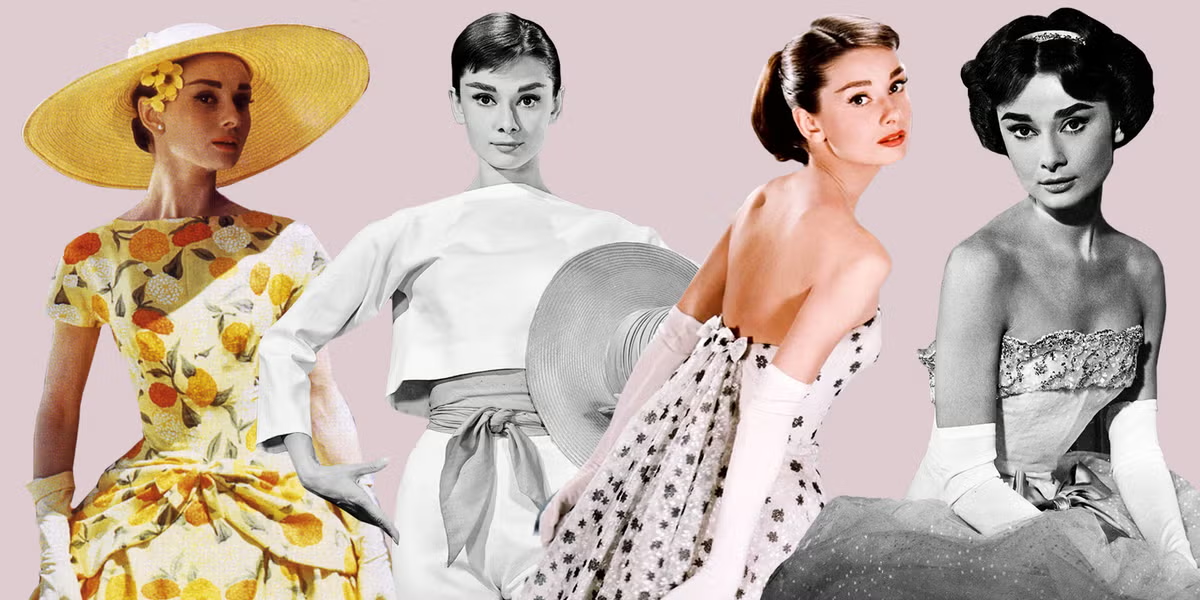
Many classic Givenchy looks by Audrey Hepburn. (Getty/Shutterstock)
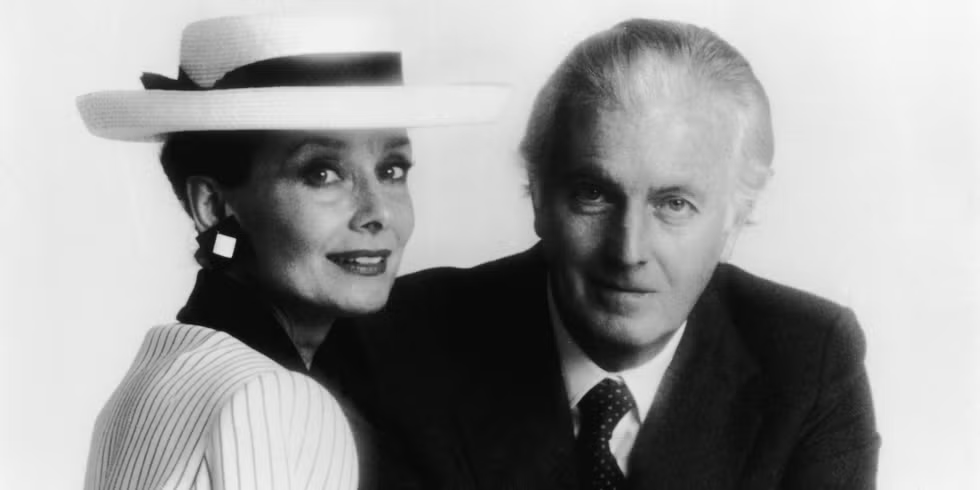
Mr. Givenchy was by Audrey Hepburn's side during her cancer battle. (Getty Images)
Summary: The Gentleman Designer and His Muses
In Mr. Givenchy's design empire, his mentors and muses undoubtedly played crucial roles. With an artisan-like design spirit, Mr. Givenchy, like a doctor, created unique looks for his clients, conquering the entire fashion world and leaving behind indelible achievements. Guided by top-tier designers such as Balenciaga, and inspired by Chanel's innovative concepts, this "gentleman designer" served mostly glamorous clients. These many goddesses are all embodiments of elegance and innovation, perfectly embodying Mr. Givenchy's design style.