
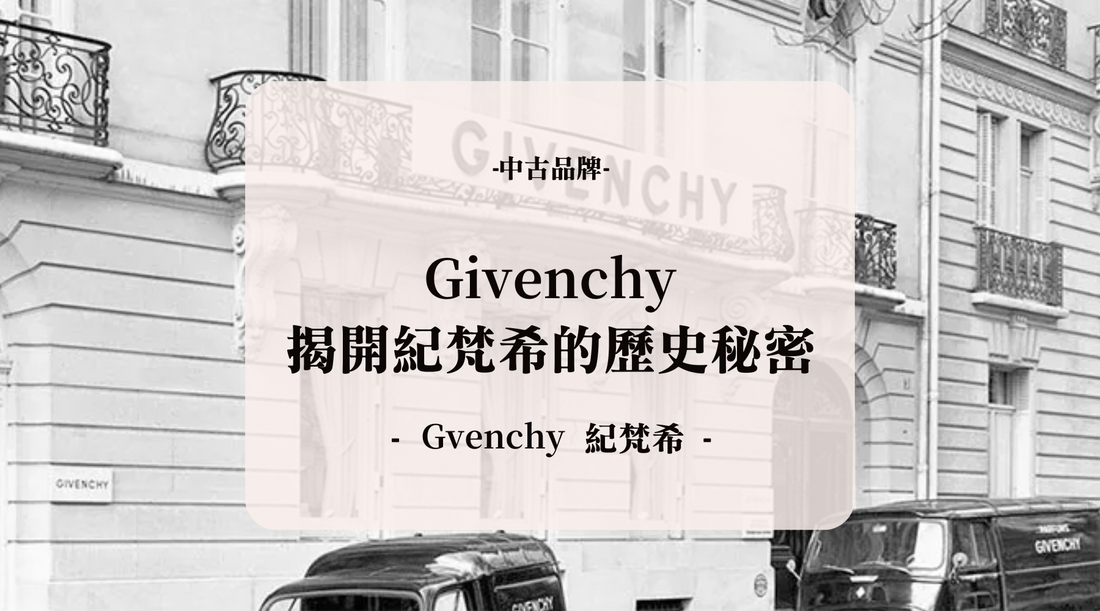
Exploring the Origins and Development of Givenchy
Hubert de Givenchy: The Embodiment of Elegance and Innovation
Givenchy is a globally renowned brand in the fashion world, famous for its elegant, innovative, and exquisite designs. This article will delve into the origins, development, and influence of Givenchy in the fashion industry. From its founder, Hubert de Givenchy, to its modern design philosophy, we will comprehensively interpret the growth story of this classic brand.
Hubert de Givenchy was born in 1927 into an aristocratic family in Beauvais, France. He was one of the most influential fashion designers of the 20th century. His deep interest in fashion design began to sprout in his youth.Mr. Givenchy studied art at the École des Beaux-Arts in Paris,, and later studied law. At the age of 17, he became an apprentice to Parisian designer Jacques Fath, but his time with Fath was short; for the next eight years, he designed for major Parisian fashion houses such as Robert Piguet, Lucien Lelong, and Elsa Schiaparelli. It wasn't until 1952 that he opened his own eponymous brand and studio,, headquartered on Rue Alfred de Vigny in the 8th arrondissement of Paris, maintaining very low management costs to reduce the price of his designs. These experiences laid a solid foundation for his later design career.
Hubert de Givenchy photographed in France in 1960. (New York Times)

Givenchy dressed Audrey Hepburn in 1957. (Alamy Stock Photo)
In Mr. Givenchy's early designs,he was primarily known for haute couture,which enabled the Givenchy brand to rise rapidly within a few years, becoming one of the leaders in the global fashion industry. In the 1950s and 60s, the brand leaped to the top tier, on par with high-end brands such as Louis Vuitton and Gucci. Mr. Givenchy was an elegant gentleman, and thus the brand he presented also possessed its own elegant uniqueness and distinctive style,It also gave rise to many well-known classic works, such as Audrey Hepburn's little black dress in *Breakfast at Tiffany's* and *Sabrina*.
Audrey Hepburn's little black dress. (Hulton Archives)
Hubert de Givenchy photographed in Paris in 1988. (Encyclopedia Britannica)
Until 1988, Mr. Givenchy sold his business to the Moet Hennessy-Louis Vuitton Group, but he continued to lead the design until his retirement in 1995, when he handed over the design work to other famous designers.
The Birth of the Givenchy Brand
In 1952, the rising star of the fashion world, Hubert de Givenchy, founded his own brand in Paris—Givenchy.This brand is hailed as "a symbol of Parisian elegance for over half a century."Its exquisite craftsmanship and unique style have greatly influenced the entire fashion industry. Givenchy's first Spring/Summer 1952 collection introduced the world of haute couture into the separate wardrobe. The “Les Séparables” collection is characterized by alternating between flamboyant shirts and long skirts, acting as a catalyst for a sensual reinterpretation of women's fashion design. It established a new design language, perfectly combining elegance and practicality, offering modern women fashion choices that are both sophisticated and functional.
The collection's design concepts, derived from architectural lines, elegant silhouettes, and minimalist fabrics, made it an instant hit, hailed by Vogue magazine as "one of the most newsworthy events of the spring." This remarkable debut set the tone for Mr. Givenchy's brand.
Mr. Givenchy chose his friend and model, Bettina Graziani, to open the show. She wore a ruffled-sleeve shirt that would later be known as the Bettina shirt, paired with his signature fitted skirt. Bettina Graziani was Hubert's lifelong collaborator, Mr. Givenchy's first muse, and played a crucial role in the founding of the Givenchy brand during her tenure as head of public relations.


In 1952, supermodel Bettina Graziani, who served as Givenchy's public relations officer, wore Givenchy's first classic Bettina shirt. (Getty Images)
Just two years later, Givenchy became the first fashion brand to launch a ready-to-wear collection, thus making fashion history—representing the democratization of the traditional fashion system and perfectly meeting the needs of the emerging post-war middle class.

Models from the Spring 1956 collection, photographed in London in 1955. (Getty Images)

Givenchy in its studio on George V Avenue. (Credit: James de Givenchy)
The birth of Givenchy marked the arrival of a completely new design philosophy, emphasizing the combination of elegance and practicality, and providing women with more choices through simple yet detailed designs. This innovative concept not only caused a sensation at the time but also laid a solid foundation for the brand's future development.
The Significance of the Brand Logo
When discussing iconic fashion brands, Givenchy is undoubtedly one of the first names that comes to mind. As a cornerstone of haute couture, Givenchy is renowned not only for its groundbreaking clothing lines but also for its iconic logo design. But have you ever wondered what the meaning behind this logo truly is?
Givenchy's logo design consists of four symmetrical "G"s forming a distinctive square. The designer created it based on the founder's initial, G. The logo features two markings above and two below, mirroring each other. Typically, graphic and wordmarks are used together or separately. Designs emphasizing symmetry often signify balance, harmony, and reliability. The original Givenchy logo lacked this symmetry, especially the uneven "G"s. However, with Paul Barnes' redesign in 2003, the focus shifted to a more symmetrical and balanced design, showcasing the brand's evolution towards perfection and refinement. The order is understood from top to bottom and left to right.
[DIORELLA_31] Top Left: Genteel
[DIORELLA_32] This logo embodies the brand's unwavering pursuit of traditional aesthetics and classic elements. It reflects Givenchy's commitment to heritage. Despite the ebb and flow of fashion trends, this logo represents the brand's core values and unwavering principles.
[DIORELLA_33] Bottom Left: Grace
[DIORELLA_34] Givenchy's designs are renowned for their clean lines and exquisite details, perfectly showcasing the natural beauty and noble temperament of women.
[DIORELLA_35] Top Right: Gaiety
[DIORELLA_36] This represents the relaxed and lively elements in the brand's fashion designs. Givenchy not only focuses on the aesthetic appeal of clothing but also emphasizes the wearer's comfort and enjoyment.
Top Left: Genteel
This logo embodies the brand's unwavering pursuit of traditional aesthetics and classic elements. It reflects Givenchy's commitment to heritage. Despite the ebb and flow of fashion trends, this logo represents the brand's core values and unwavering principles.
Bottom Left: Grace
Givenchy's designs are renowned for their clean lines and exquisite details, perfectly showcasing the natural beauty and noble temperament of women.
Top Right: Gaiety
This represents the relaxed and lively elements in the brand's fashion designs. Givenchy not only focuses on the aesthetic appeal of clothing but also emphasizes the wearer's comfort and enjoyment.
Bottom right: Givenchy
Finally, the Givenchy logo also represents the brand itself—GIVENCHY. This name is not just a brand, but a symbol, representing exceptional design, unparalleled quality, and timeless fashion.
More importantly, the brand uses a different logo for its fragrance products. Because the word "Givenchy" couldn't fit the frame size, the designer introduced this visual identity. Therefore, it consists of the iconic G (graphic mark) and the wordmark (Parfums).


Image source: Givenchy official website
These embody Givenchy's commitment to heritage, perfectly showcasing the natural beauty and noble temperament of women, and focusing on the wearer's comfort and enjoyment. This name is more than just a brand; it's a symbol, representing exceptional design, unparalleled quality, and timeless fashion. These four qualities are the core of the brand, influencing its early medieval development and constituting Givenchy's unique charm, making it a classic symbol in the hearts of countless people.
The Elegant Female Image Cultivated by Givenchy
When you wear Givenchy clothing, you will feel an unparalleled elegance and nobility. Since its inception, Givenchy has been committed to cultivating this unique female image, allowing every woman who wears Givenchy to feel the elegance and confidence of a French aristocrat.
Givenchy's classic little black dress is the best representative of the brand's cultivation of elegant femininity. This little black dress, worn by Audrey Hepburn in "Breakfast at Tiffany's," has not only become a classic look in film history but also a timeless example in the fashion world. This simple yet sophisticated dress allows you to exude an innate elegance in any setting, reminiscent of a French aristocrat.

Audrey Hepburn's little black dress. (Hulton Archives)
Image from *Breakfast at Tiffany's*
Besides the classic little black dress, Givenchy has shaped its unique feminine image through many other elegant designs. These designs also embody the brand's "simple yet sophisticated" design philosophy and profoundly influenced fashion trends at the time.
A prime example is the white satin evening gown Givenchy designed for Audrey Hepburn in 1957, which appeared in the film *Funny Face*. This white gown is known for its clean A-line silhouette and high waist, with a naturally draped skirt showcasing elegant lines. This design style makes the wearer look both dignified and confident, perfectly showcasing Givenchy's understanding of the elegant female image. In terms of fabric selection, this white satin evening gown uses high-quality satin, a fabric with a lustrous sheen and a soft touch. This enhances the texture of the garment and strengthens its visual sophistication, allowing women to exude a noble aura.

Many girls dream of wearing Audrey Hepburn's wedding dress in "Funny Face".
A classic in fashion history: The birth of the little black dress
The little black dress, a classic item in the fashion world, draws its design inspiration and historical background from French designer Hubert de Givenchy. In 1954, Givenchy designed a classic little black dress for Audrey Hepburn in the film *Breakfast at Tiffany's*. This design not only became a classic look in film history but also sparked a trend of simple elegance in the fashion world.

Audrey Hepburn wearing a Givenchy little black dress in *Breakfast at Tiffany's*.
Givenchy's little black dress design was inspired by his profound understanding of the beauty of feminine elegance and simplicity. However, this work has been imitated and modified many times, resulting in various styles of little black dresses. Following French designer Coco Chanel's introduction of this concept in the 1920s, Givenchy's black cocktail dress is considered one of the most influential dresses in 20th-century fashion and design history, representing the most modern interpretation of the little black dress.
But the original version of the Givenchy black jumpsuit was actually shorter and was never worn in a film, yet it has its own life and is currently housed in the Givenchy archives. Another copy is now in the Costume Museum in Madrid, and a third was finally sold at Christie's in 2006 to an anonymous buyer for a final price of £467,200 ($649,641), with the profits donated by Givenchy to the City of Joy Aid program aimed at helping those in need in Kolkata, India.

Alexander McQueen Fall/Winter 1998 Givenchy Haute Couture Collection

Matthew Williams' Givenchy Fall/Winter 2021 Collection
Over the years, designers such as John Galliano, Alexander McQueen, Riccardo Tisci, Clare Waight Keller, and more recently Matthew Williams have revamped the little black dress. From McQueen's modernized leather version of the straight silhouette to Waight Keller, they have all carried on Mr. Givenchy's creative direction in their own ways.
Givenchy Haute Couture
Givenchy is one of the few French haute couture brands. Whether it's a custom-made evening gown or a wedding dress, Givenchy perfectly blends French elegance with modern innovation, bringing a unique luxury experience to every wearer.
Hubert de Givenchy mastered the techniques of designing and making clothing, evolving them into a unique craft that he passed on to his artisans. Thirty years after the founder's retirement, some of these artisans still preserve this traditional skill within the brand's craftsmanship. Haute couture is always made in this relatively private space, where the attention to detail is unparalleled. With passion and patience, highly skilled artisans meticulously seek the perfect way to create garments.
Secondly, Givenchy's wedding dress designs are equally stunning. With its unique design style and exceptional craftsmanship, the brand creates dreamlike wedding looks for brides. Each wedding dress is custom-made to the bride's individual needs, reflecting Givenchy's relentless pursuit of quality from fabric selection to meticulous design details. Whether simple and elegant or ornate and elaborate, Givenchy wedding dresses ensure the bride is the most radiant presence on her wedding day.
Every stitch of each custom-made garment is handcrafted, typically requiring hundreds, sometimes even thousands, of hours of work. In France, such haute couture brands are rare, making the artisans and their craftsmanship the foundation of the Givenchy atelier—a sanctuary where dreams come true. These details not only enhance the gown's opulence but also allow the wearer to exude confidence and elegance in any setting.

Image from Givenchy official website
Image from Givenchy official website

Image from Givenchy official website
The Launch of the First Perfume
In 1957, the French fashion brand Givenchy launched its first perfume—L'Interdit. Behind the creation of this perfume lies a touching story. The name L'Interdit means "forbidden" in French. This perfume was created by Givenchy founder Hubert de Givenchy specifically for his muse, Audrey Hepburn. Hepburn was not only a close friend of Givenchy but also the brand's ambassador; her elegance and charm perfectly embodied the essence of this perfume.
L'Interdit's fragrance is a tribute to feminine elegance and mystery, blending floral and woody notes. It features fresh orange blossom and jasmine, alongside rich vetiver and patchouli. This unique formula garnered widespread attention upon its market launch, quickly becoming a classic in the fashion world and among consumers.
In terms of market response, L'Interdit's launch was undoubtedly a success. This fragrance not only received enthusiastic acclaim in France but also rapidly expanded into international markets, becoming a coveted luxury item for women worldwide. Its success also marked Givenchy's official entry into the fragrance field, laying a solid foundation for the brand's future diversified development.
L'Interdit is more than just a fragrance; it's a symbol of a lifestyle. It represents women's confidence, elegance, and independence—qualities that perfectly align with Audrey Hepburn's image. With this fragrance, Givenchy not only conveyed its core brand values but also set a new benchmark in the perfume market.


Image from Givenchy official website
The launch of Givenchy's first fragrance, L'Interdit, not only achieved tremendous success in the market but also profoundly influenced the entire perfume industry. The story of this fragrance and its market response remain legendary tales in the fashion world.
Givenchy: Elegance and Innovation, A Timeless Interpretation
Since its founding in 1952, the Givenchy brand has occupied an important position in the fashion world with its elegant designs and exquisite craftsmanship. From its initial haute couture to its diverse modern styles, Givenchy has continuously evolved, showcasing the brand's timeless charm.
1950s-60s: The Golden Age of Elegance
Mr. Givenchy's early designs were renowned for haute couture, creating many classic pieces for Audrey Hepburn, such as the little black dress in *Breakfast at Tiffany's* and the gown in *Sabrina*, establishing the brand's elegant tone. Designs from this period were characterized by clean lines, exquisite tailoring, and high-quality materials. For example, the 1957 "Bettina" shirt, with its ruffled cuffs and cinched waist, remains a classic to this day.

Hepburn's third Givenchy dress as Sabrina exudes an irresistible sweetness and uniqueness. Image from IMDB
1970s-80s: Continuation and Innovation of Style
As times changed, Givenchy began exploring new styles, incorporating more modern elements. For example, the 1970 "Givenchy Gentleman" perfume, with its fresh woody notes, became a classic. Designs during this period emphasized practicality and comfort while retaining the brand's elegant essence.

1990s to Present: Diversified Development
In 1988, Givenchy was acquired by the Louis Vuitton Group, beginning a new phase of development. The brand hired many renowned designers, constantly innovating and creating more diverse and modern designs. For example, Alexander McQueen served as designer from 1996 to 2001, incorporating Gothic style into Givenchy's designs, creating stunning garments. Riccardo Tisci served as designer from 2005 to 2011, injecting new vitality into the Givenchy brand with his elegant and sensual designs. Current designer Matteo Marani incorporates modern urban style into his designs, creating more contemporary clothing.

The Fall/Winter women's collection, presented in March 1997, was Alexander McQueen's first ready-to-wear collection for Givenchy.
Riccardo Tisci Spring/Summer 2009 Haute Couture Collection
Beyond the evolution of fashion, the Givenchy brand actively participates in environmental issues. In recent years, the brand has been committed to using sustainable materials and production methods, launching several eco-friendly collections. For example, the brand launched the "G-Cube" handbag made from recycled plastic bottles, and the "Urban K" clothing line made from organic cotton. These products not only showcase the brand's environmental philosophy but also provide consumers with more sustainable choices.

“Urban K” collection, image from Amazon.
The development of the Givenchy brand is not merely an evolution of fashion, but a story of elegance, innovation, and diversity. It proves that classic brands can evolve with the times, maintaining their unique charm and becoming classic models in the fashion world, profoundly influencing subsequent designers and trends.